
Steam system maintenance
and optimization
Steam travels through your plant, from the boiler room to your equipment, then returns as condensate. Every issue costs you in heating time, equipment replacement and energy. We turn steam maintenance into a driver of energy performance.

Condensed efficiency
We help you identify steam system issues and prioritize corrective work. Then we track the results with you.
Our goal: connect your maintenance work to your reliability and energy efficiency priorities.
Drain at the source, recover on the return
When a steam system drifts out of spec, production feels it long before the bill arrives. A heat exchanger takes longer to reach temperature. Water hammer echoes when the line starts up. A plume rises from the roof, and no one knows whether it’s a leak.
Our steam system maintenance and optimization service starts with these symptoms. We examine the system from the boiler room outlet to the condensate return. Drainage is addressed at the source: end-of-line drains, slopes and properly selected steam traps. Condensate is then recovered along with its heat.
Then we place steam within the plant’s heat balance. Your refrigeration, air and hot water all enter the same calculation. This integrated view guides the order of our corrective work.
Steam maintenance essentials
Steam systems, process reliability and thermal needs
Other specialists already offer steam trap inspections and routine maintenance. These services have their place. Our approach connects the steam system, process reliability, thermal needs and connected monitoring.
Inspection and component replacement remain the starting point. We turn them into a driver of energy performance. Our pipefitters, refrigeration specialists, technicians and engineers work under one roof. They draw on our published industrial piping and heat recovery projects.
Your steam system, connected to the rest of your plant
| In your plant | What we examine on the steam side | What we connect at Soteck Clauger |
|---|---|---|
|
Hot water for washdown and clean-in-place (CIP) |
Steam-to-water heat exchangers, controls, drainage, heating time |
Industrial heat pump up to 85 °C, or prefabricated high-efficiency heating and pumping stations |
|
Refrigeration machine room |
Heating needs currently met by steam |
Heat recovery from NH₃ or CO₂ refrigeration |
|
Air treatment and space heating |
Steam coils, freezing risk, stall at low load |
Industrial ventilation and hygienic air treatment units |
|
Piping, fittings and insulation |
Steam traps, separators, pressure-reducing valves, valve and pipe insulation |
Industrial piping and shop prefabrication |
|
Measurement and monitoring |
Steam trap condition, condensate returns, normalized consumption |
MyPortal3E, depending on the instrumentation selected |
|
Investment decision |
Costs, estimated savings, verified savings |
Each connection is validated through an assessment: temperatures, flow rates and simultaneous demand. First, we restore the system. Then we assess heat recovery, use by use.
7 points we examine, from the boiler room to the return
The diagram follows steam from production to its return as feedwater. Each numbered point corresponds to a check in our diagnostic.
Note: Soteck Clauger schematic. It does not represent an actual installation.
- Boiler room. Operated by your power engineers. We coordinate our work there.
- Header and steam main. Slopes, drip legs and insulation.
- Pressure-reducing station. Separator, pressure-reducing valve and safety valve.
- Process equipment. Heat exchangers, cookers, pasteurizers and coils.
- Steam traps. Type suited to the application and sufficient differential pressure.
- Condensate return. Vented tank and pumps.
- Recoverable heat. Stack and vent heat for medium-temperature hot water. Heat pump for higher-temperature heat recovery.
From symptom to cause
A symptom that returns after a replacement often points to the application itself. Before changing a part, we check the conditions around it. Here are common symptoms and what we check for each one.
Common steam system symptoms and associated checks
| Observed symptom | Common cause | What we check |
|---|---|---|
|
Heat exchanger heats poorly at low load |
Stall: pressure in the heat exchanger falls below return pressure (1) |
Pressure at different loads, modulating valve, calculated stall point, pipe elevation downstream of the steam trap, pump trap or reduced backpressure (15) |
|
Water hammer on startup |
Condensate collects in pockets, then is propelled at high speed through the pipe (2) |
Slopes, end-of-line drainage, warm-up sequence and piping configuration |
|
Plume above a discharge point |
Normal flash steam from condensate, or a live steam leak (3) |
Steam trap condition and temperature (16) |
|
Abnormally high cold makeup water, above 15% |
Condensate discharged to the drain or lost along the way |
Destination, flow rate, temperature and quality of each return |
|
Unstable pressure downstream of a pressure-reducing valve (PRV) |
Condensate in the pilot, valve unsuited to actual flow |
Upstream separator, drainage and valve selection based on pressure, temperature and flow calculations (14) |
|
Valves and pipes too hot to touch |
Missing, wet or damaged insulation |
Surface temperature readings |
Saturated steam reference values
In saturated steam, pressure determines temperature. The table shows four pressures commonly found in plants. The last column shows the proportion of condensate that flashes to steam at atmospheric pressure.
Saturated steam: temperature, latent heat and flash steam
| Pressure (kPa gauge) | Pressure (psig) | Saturation temperature | Latent heat | Flash steam at atmospheric pressure |
|---|---|---|---|---|
|
103 |
15 |
121.0 °C |
2,199 kJ/kg |
3,9 % |
|
345 |
50 |
147.6 °C |
2,121 kJ/kg |
9,0 % |
|
689 |
100 |
169.9 °C |
2,049 kJ/kg |
13,3 % |
|
1 034 |
150 |
185.5 °C |
1,994 kJ/kg |
16,3 % |
From diagnostics to monitoring, in four stages
We define the scope with you: equipment included, access, shutdown windows and deliverables. Each stage produces a document your teams can use.
15 to 30%
of steam traps may fail after three to five years without maintenance (6).
Less than 5%
of steam traps leak with a regular maintenance program (6).
13,3 %
of condensate at 689 kPa (100 psig) flashes to steam at atmospheric pressure (5).
1. Targeted diagnostics
We inventory the steam traps and fittings within the agreed scope. Each steam trap is tested according to its type and application. We combine temperature readings, ultrasonic testing and visual inspection of the installation (17).
Deliverable: steam trap register classifying each trap as working properly, leaking, blocked or untested.
2. Corrective action plan
Issues are prioritized according to safety, production and energy potential. We separate routine repairs from modifications that require further study.
Deliverable: prioritized list, estimated costs and calculation assumptions.
3. Corrective work and optimization
Our pipefitters carry out corrective work, often during your planned shutdowns. We review drainage, pressure-reducing stations and condensate returns. Every intervention ends with a startup test.
Deliverable: work report, test results and outstanding issues.
4. Performance monitoring
Visit frequency depends on the system and the issues observed. An annual visit may be enough (6).
Deliverable: periodic report separating estimated savings from verified savings.
Recover what your condensate still carries
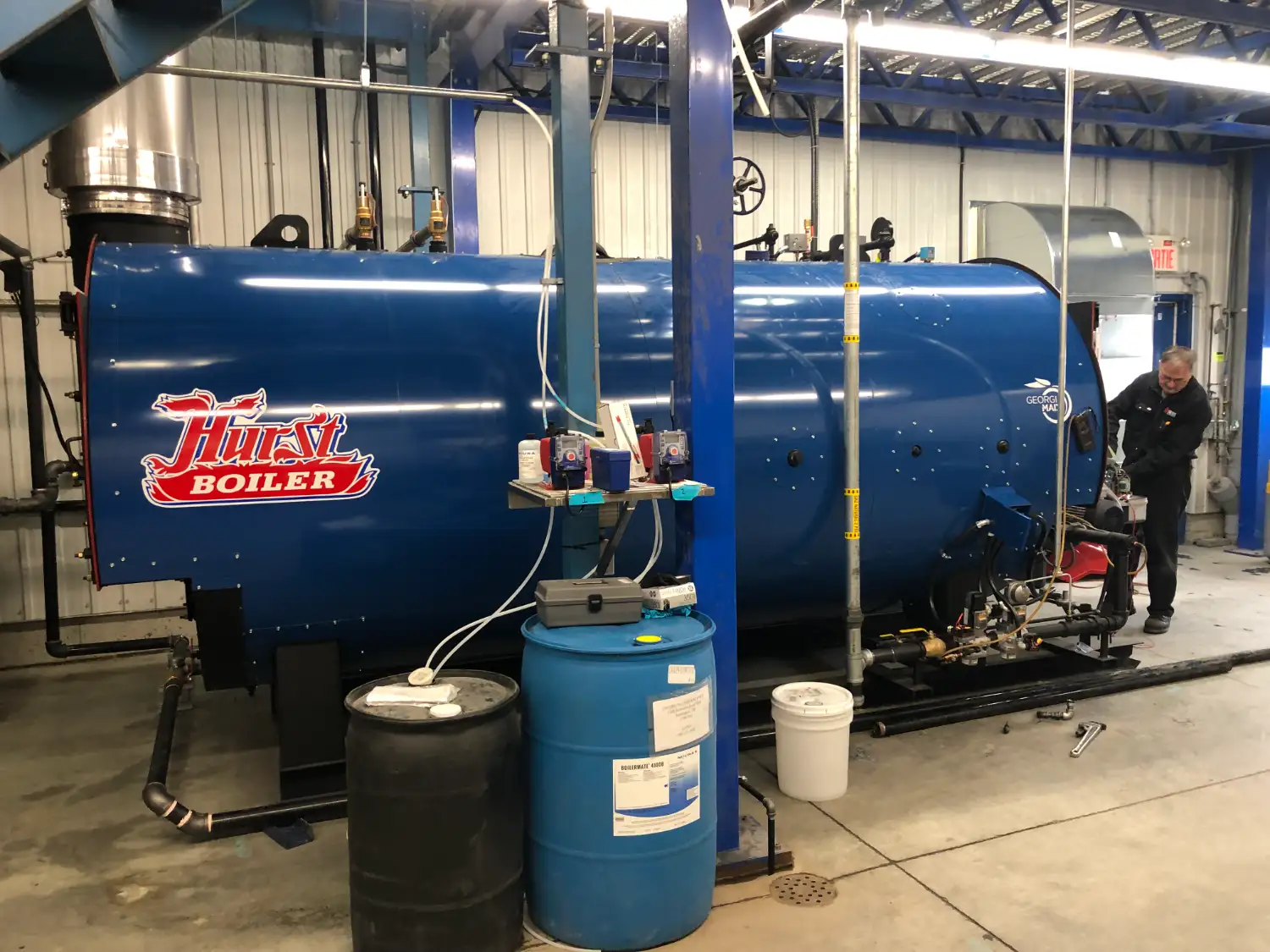
Condensate often leaves equipment at 54 to 107 °C (7). Returning it to the boiler room reduces fuel, makeup water and chemical treatment requirements (7). It also reduces boiler blowdown losses and discharges to the drain (7).
Before recovery, we verify the quality and destination of each return. Contaminated condensate does not return to the boiler. Its heat can sometimes be recovered through a heat exchanger.
Culinary steam: a special case
Steam in direct contact with food is covered by a CFIA guideline (8). Feedwater must be potable and additives suitable for the application (8). The CFIA recommends sampling condensate between the final separator and the injection point (8). We work with your quality team and water treatment specialist.
Our solutions for steam and condensate systems
- Inspection, repair and replacement of steam traps
- Steam trap selection by application: float, thermodynamic, thermostatic or inverted bucket
- Drainage of headers and steam mains
- Pressure-reducing stations: separator, pressure-reducing valve and safety valve
- Solutions for heat exchanger stall
- Open or pressurized condensate return systems
- Flash steam recovery
- Insulation and removable covers for valves and fittings
- Culinary steam assemblies, in collaboration with your quality team
- Prefabrication of piping and heat exchanger stations ahead of your planned shutdowns
- Performance indicator tracking in MyPortal3E, depending on the instrumentation selected
What our service does not replace
Our service covers distribution, end-use equipment and returns. Some responsibilities remain with others, by design.
- Boiler room supervision remains the responsibility of your certified power engineers (9).
- Periodic inspection of pressure equipment follows the RBQ inspection regime (10).
- Chemical treatment of boiler water remains with your specialist supplier.
We coordinate our work with each of them.
Funding corrective work
Is more than 50% of your steam produced using natural gas? Énergir funds steam trap audits and part of the repair costs (11). The audit may be covered up to $6,700. Each steam trap repaired or replaced may qualify for a $100 to $225 incentive.
The program requires an authorized provider and registration before work begins (11). Énergir notes that the program may change without notice. Our financial engineering team checks eligibility with you.
The regulatory framework we work within
In Québec, a steam system falls under several regulatory frameworks at once. The table summarizes those that affect our work.
Regulations and standards applicable to steam systems
| Regulation or standard | What it covers | What it means for your system |
|---|---|---|
|
Regulation respecting pressure installations (CQLR, c. B-1.1, r. 6.1) |
Boilers, pressure vessels and pressure piping |
Amended version effective July 29, 2026, reinstating periodic RBQ inspections (10) |
|
CSA B51 Code |
Design, installation, operation, inspection, testing and repair |
Reference code for steam piping work (12) |
|
Stationary Enginemen Act and Regulation (CQLR, c. M-6) |
Boiler supervision and operation |
Your certified power engineers remain responsible for the boiler room (9) |
|
CFIA, culinary steam guideline |
Steam in direct contact with food |
Potable water, suitable additives, condensate sampling (8) |
Why trust us with your steam projects?
- Soteck Clauger is a Québec company founded in 1993, specializing in industrial piping, refrigeration and air treatment.
- More than 120 team members in Victoriaville, Montréal, Trois-Rivières and Saint-Hyacinthe.
- RBQ accreditation for piping and pressure vessels, with a quality control program.
- One team for steam, refrigeration and air: fewer interfaces on the job site.
- Qualified as an energy services company (ESCO).
- The Flash Audit places steam in the context of your energy balance.
Better steam drainage, more stable production
Every steam system has a history: expansions, added equipment, steam traps replaced one at a time. The results show up in heating times and gas bills. Our role: find the cause, make corrections in the right order and measure the impact.
Then we assess how much energy heat recovery can save in steam production. The result: decisions backed by measurements from your plant.
Should your steam system optimization start at your next shutdown?
A troublesome heat exchanger, a noisy area or a planned shutdown is enough to get started. Tell us about your installation and your main challenge. Together, we define an initial scope before discussing the work.
The Flash Audit places steam in the context of your overall energy costs. Larger projects go through our complete engineering, technology and financing offering. Our article Steam maintenance: a driver of energy performance presents four signs to watch for.
Steam systems: questions we hear in the field
These ten questions rarely arrive by email. We hear them beside the equipment, from power engineers and maintenance managers. They follow the steam’s journey: the steam trap, the heat exchanger that heats poorly, the pipe that bangs, then the condensate returning to the boiler room.
Each answer provides a pressure, flow rate or temperature and refers to its primary source or a Soteck Clauger calculation. Pierre-André Poirier Guay, Eng., validated them on November 16, 2026. Budget and project planning questions are covered in our article Steam maintenance: a driver of energy performance.
Is a “trappe à vapeur” the same thing as a steam trap?
Yes. “Trappe à vapeur” is the Québec French expression, modelled on steam trap. “Purgeur de vapeur” is the recommended French term.
There are three main families: mechanical traps (float or inverted bucket), thermostatic traps and thermodynamic traps.
Which steam trap should I choose for a modulating control valve?
Why does a steam heat exchanger heat poorly with a new steam trap?
Often because of a condition called stall. When the control valve closes, pressure drops in the heat exchanger (1). It can fall below return backpressure or even atmospheric pressure (1). Condensate stops draining, even if the steam trap works.
Every metre of rise in the return adds backpressure. We therefore calculate the stall point according to load. A pump trap overcomes backpressure and lifts the condensate (15).
How often should steam traps be inspected?
It depends on system pressure. The DOE recommends checks weekly to monthly at 1,034 kPa (150 psig) and above (6). Between 207 and 1,034 kPa, it recommends monthly to quarterly checks (6). Below 207 kPa (30 psig), an annual check may be enough (6).
Without maintenance for three to five years, 15 to 30% of steam traps may fail (6). A regular program brings leakage below 5%. We then adjust the frequency based on criticality and history.
How much steam does a leaking steam trap lose?
About 300 tonnes per year for a 3.2 mm orifice at 1,034 kPa. In the DOE example, the leak reaches 34.4 kg/h, or 75.8 lb/h (6). The calculation assumes discharge to the atmosphere for 8,760 hours per year (6). Losses vary with orifice diameter and pressure.
We apply this method to each leak, using your actual steam cost. Estimated savings are then verified after the work.
What causes water hammer in a steam system?
How much does condensate recovery save?
About 12% of steam production energy with a return at 90 °C. The calculation uses makeup water at 10 °C and steam at 689 kPa as a reference (5). Returning condensate also reduces makeup water, chemical treatment and blowdown losses (7). Before recovery, we check the quality and destination of each return.
Why insulate steam system valves and fittings?
Because an uninsulated surface continuously loses heat. The DOE estimates that insulation generally reduces these losses by 90% (4). It recommends insulating any surface above 49 °C (120 °F) (4). Wet or damaged insulation should be replaced once the leak is fixed (4).
We install removable covers on valves and steam traps. They come off for maintenance, then go back on.
Can recovered heat replace some steam use?
Yes, for uses below approximately 85 °C. An industrial heat pump produces water at up to 85 °C, with a COP of 3.1 to 3.7. Washdown water and makeup water preheating are well suited to this approach. High-temperature cooking and sterilization remain steam applications.
Heat rejected by the refrigeration condenser can also preheat water. We verify this through an assessment of temperatures, flow rates and simultaneous demand.
Who can work on steam piping in Québec?
A contractor holding the appropriate RBQ licence. Work must comply with the Regulation respecting pressure installations and the CSA B51 Code (12). Pressure equipment is registered with the RBQ and assigned a Canadian Registration Number (CRN) (19).
Soteck Clauger holds RBQ accreditation for piping and pressure vessels. Boiler room supervision remains with your certified power engineers (9).
Page written in collaboration with our experts:

Jean-Luc Boisvert
Account Manager and Steam Designer
Jean-Luc joined Soteck Clauger in October 2026 as Account Manager and Steam Designer. He has more than 33 years of experience in industrial processes and maintenance, and has conducted over 200 steam application inspections and diagnostics.
In the plant, he traces a symptom, such as a leaking steam trap or a poorly heating exchanger, back to its cause. He then works with the maintenance team to build a corrective action plan that takes production constraints into account.
Expertise: steam and condensate systems, steam traps, diagnostics and inspection, industrial maintenance.

Pierre-André Poirier Guay, Eng., has been with Soteck Clauger since 2006. He has more than 20 years of experience in building mechanical systems and industrial processes. He turns complex needs into durable, high-performance solutions.
Expertise: engineering, piping, NH₃ and CO₂ refrigeration, energy efficiency, ventilation.
Page written November 16, 2026, with regulatory information and funding programs verified as of that date.
Conclusion and sources
Content validated by: Pierre-André Poirier Guay, Eng., Director, Engineering & Innovation. With the company since 2006, he has more than 20 years of experience in industrial processes. Page written November 16, 2026.
A poorly heating steam heat exchanger is rarely fixed with a new steam trap alone. Stall, drainage and backpressure are diagnosed together. Water hammer in a steam system follows the same drainage logic.
In Québec agri-food plants, culinary steam brings its own quality requirements. Our industrial steam piping team aligns its work with your preventive control plan.
Steam trap inspections may qualify for an Énergir steam trap maintenance incentive. Eligibility is checked before work begins. Recovered condensate and refrigeration heat then complete the industrial steam management picture.
All pages were accessed on November 16, 2026. Unconfirmed: continuation of the Énergir program, which may change without notice. Also unconfirmed: the edition of CSA B51 adopted by the RBQ. Saturated steam values are calculated by Soteck Clauger.
- TLV, What is Stall?, Steam Theory, Steam Trap Problems section, accessed in 2026. Read the article
- TLV, Water Hammer: The Mechanism, Steam Theory, Steam Trap Problems section, accessed in 2026. Read the article
- TLV, Flash Steam, Steam Theory, Basics of Steam section, accessed in 2026. Read the article
- U.S. Department of Energy, Advanced Manufacturing Office, Insulate Steam Distribution and Condensate Return Lines, Energy Tips: Steam, Steam Tip Sheet #2, DOE/GO-102012-3404, January 2012. View the tip sheet
- International Association for the Properties of Water and Steam, Revised Release on the IAPWS Formulation 1995 for the Thermodynamic Properties of Ordinary Water Substance, R6-95 (2018), December 21, 2018; Soteck Clauger calculation using the CoolProp 8.0 library. View the standard
- U.S. Department of Energy, Advanced Manufacturing Office, Inspect and Repair Steam Traps, Energy Tips: Steam, Steam Tip Sheet #1, DOE/GO-102012-3401, January 2012. View the tip sheet
- U.S. Department of Energy, Advanced Manufacturing Office, Return Condensate to the Boiler, Energy Tips: Steam, Steam Tip Sheet #8, DOE/GO-102012-3410, January 2012. View the tip sheet
- Canadian Food Inspection Agency, Culinary steam, preventive controls, guideline related to the Safe Food for Canadians Regulations, amended April 16, 2019. View the guideline
- Government of Québec, Stationary engine mechanic certificate, class 3 (MMF-C3), Stationary Enginemen Act and Regulation, CQLR, c. M-6 and M-6, r. 1. View the information sheet
- Régie du bâtiment du Québec, Pressure installations: regulation published for entry into force, news release dated July 15, 2026, effective July 29, 2026. Read the news release
- Énergir, Steam trap maintenance, energy efficiency programs, business customers, accessed in 2026. View the program
- Régie du bâtiment du Québec, Pressure installations: codes and standards, CSA B51 Code and ASME codes incorporated by reference, accessed in 2026. View the page
- Spirax Sarco, Selecting Steam Traps: Space Heating Equipment, Learn About Steam, Steam Traps and Steam Trapping, accessed in 2026. Read the guide
- Spirax Sarco, Selecting Steam Traps: Steam Mains, Tanks and Vats, Pressure Reducing Valves, Learn About Steam, Steam Traps and Steam Trapping, accessed in 2026. Read the guide
- TLV, Methods of Mitigating Stall, Steam Theory, Steam Trap Problems section, accessed in 2026. Read the article
- TLV, Is My Trap Leaking Live Steam?, Steam Theory, Basics of Steam section, accessed in 2026. Read the article
- TLV, A Guide to Steam Trap Testing, Steam Theory, Steam Trap Considerations section, accessed in 2026. Read the guide
- Spirax Sarco, Steam Mains and Drainage, Learn About Steam, Steam Distribution, accessed in 2026. Read the guide
- Régie du bâtiment du Québec, Application for registration of plans and specifications, form for pressure equipment within the meaning of CSA B51, version 2020-04. View the form