
Rapid Cooling of Dairy Products
Cooling Efficiency and Energy Management for Dairy Plants

Controlled Cooling for Dairy Products
We support dairy processors with customized rapid cooling solutions, which are essential for controlling the cooling process of yogurts, dessert creams, and processed cheeses. This precise temperature control ensures the optimal quality of your products while meeting the most demanding production deadlines. Our expertise also extends to the meat and bakery sectors, which require precise temperature control.
Controlled dairy cooling
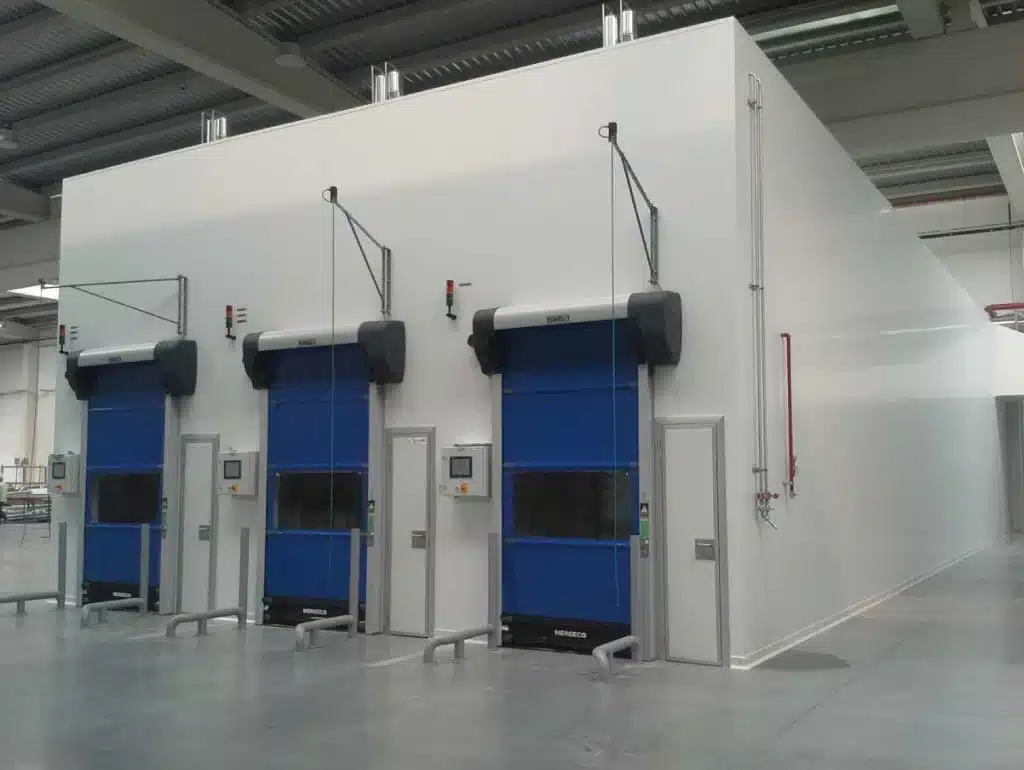
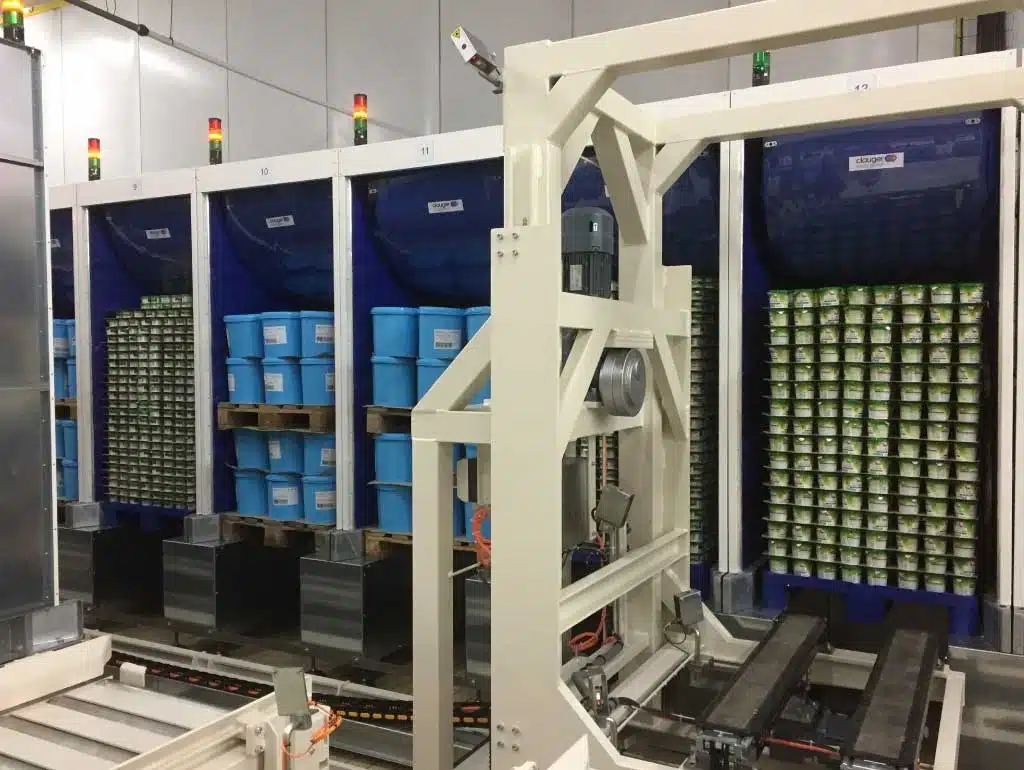
For the rapid cooling of dairy products: acidity, texture, and shelf life—extended up to 40 days—are determined in the hours following production. We design rapid cooling systems for yogurt and dessert creams using uniform, modular cells sized to accommodate your product formats and production rates.
Refrigeration systems for dairy plants rely on the natural refrigerants NH₃ and CO₂, while heat recovery systems in dairy plants repurpose waste heat for your processes.
Comprehensive expertise in HYGIENIC air treatment
Our comprehensive approach covers every stage of your dairy production:
- Precise control of conditions in the production and filling areas to ensure a stable and clean environment;
- Control of pre-cooling ovens and post-production storage to minimize temperature fluctuations;
- Advanced airflow management with optimal filtration and precise humidity control.
With over 30 years of expertise, we combine low-temperature refrigeration and air treatment into a single solution.
Sustainable innovation to reduce your energy costs
Your Partner in Sustainable Performance
With our 360° view of your plant, we integrate and optimize all your energy sources to help you achieve your energy efficiency goals. Our solutions significantly reduce your environmental impact while ensuring optimal and sustainable production performance. This is our commitment: to transform your dairy industry into a model of energy efficiency and product quality, for today and tomorrow.
FAQ: Precise Cooling to Protect the Quality of Your Products
Rapid cooling, air control, and energy efficiency are key to the quality of your yogurts, dessert creams, and processed cheeses.
Here are the questions dairy processors ask us most often, along with practical answers: temperature targets, equipment selection, natural fluids, heat recovery, and signs that a process needs to be reviewed.
Why is rapid cooling essential for fresh dairy products?
Rapid cooling controls the rate at which yogurts, dessert creams, and processed cheeses cool down immediately after production. This process preserves acidity and texture and extends shelf life by up to 40 days. It also reduces the space required for cooling and speeds up production and shipping flows.
Conversely, a decline that is too slow results in discrepancies between batches, tied-up inventory, and delivery delays.
How can you effectively chill yogurt and dessert creams?
The standard process involves a controlled cooling from approximately 70 °C to 4 °C over one to six hours, depending on the product and container size. Our rapid-cooling cells—which are uniform and modular—are sized according to viscosity, inlet temperature, container size, and filling rate. Consistency is just as important as speed: uneven cooling from one pallet to another creates variations in texture and acidity between batches.
What factors influence the quality of fresh dairy products?
Four key factors really matter: the rate and uniformity of the temperature drop, air quality in the production and filling rooms, control of the drying ovens prior to cooling, and post-production storage conditions. Filtration, relative humidity, and pressure differentials between zones round out the picture. We address these steps collectively because a single weak link can negate the gains achieved elsewhere in the chain.
How does hygienic air treatment help maintain a dairy plant's sanitation?
It maintains stable and clean conditions where the product is exposed, prior to sealing the container: appropriate filtration, humidity control, pressurization of critical areas, and controlled air distribution. Our 100% stainless steel Climinox air conditioners, the CAN-Kit pressurization system, antimicrobial fabric ducts, and E-Streaming airflow monitoring are specifically designed for these production and filling areas.
What are the benefits of heat recovery in a dairy plant?
Refrigeration systems continuously release waste heat. We recover this heat to reuse it in your processes—for hot water, cleaning, preheating, or building heating—depending on the site’s needs. The Hi-PAC 85 industrial heat pump raises this heat to a usable temperature. We quantify the potential before any purchase is made: ourFlash Audit identifies heat losses, achievable savings, and available grants in just one day.
Are natural fluids suitable for a dairy processing plant?
Yes. Our systems use ammonia (NH₃) and CO₂, natural refrigerants with a low environmental impact that are commonly used in dairy processing. The choice between the two depends on temperature levels, building configuration, the allowable load, and the operational expertise available. We also have expertise in next-generation HFOs, including R1233zd in our Hi-PAC 85 heat pumps, which allows us to compare options without any technological bias.
How can you reduce the energy consumption of a dairy cooling system?
We start by taking measurements: actual cooling loads, operating temperatures, and hourly profiles. The Flash Audit provides this overview in just one day, including quantified savings and available grants. Next come system sizing, control systems, waste heat recovery, and continuous monitoring via MyPortal3E, our energy management system. The targeted results are backed by a written performance guarantee—a contractual commitment.
When should a dairy product cooling process be reviewed?
When cooling times increase, when temperatures vary from one batch to another, when buffer storage becomes overloaded, or when energy costs rise without a corresponding increase in production. The addition of a production line, a new format, or a new recipe also warrants a review. The assessment determines whether the issue lies with capacity, control systems, or distribution, and a single day of diagnostics is usually sufficient before proceeding with any work.
How could you turn your energy costs into a competitive advantage?
It all starts with measurements: actual refrigeration loads, operating temperatures, and hourly profiles.The Flash Audit provides this overview in just one day, including quantified savings and available grants.
This is followed by sizing, control, waste heat recovery, and continuous monitoring via MyPortal3E. The targeted results are covered by a written performance guarantee, which constitutes a contractual commitment.
For both raw milk and yogurt, the rate at which the temperature drops is the key factor: it limits the growth of microorganisms, ensures food safety, and guarantees consistent quality from one batch to the next. Stable temperature control throughout the entire production line also reduces process rework and downtime between CIP cycles.
When lead times lengthen, when buffer stock overflows, and when costs rise without a corresponding increase in production, the bottleneck is rarely where you’d expect it to be: capacity, control, or distribution. A day of diagnostic analysis is essential before starting any work. An additional production line, a new format, or a new recipe all warrant the same review.
The agri-food market demands a high level of reliability and high-quality products in order to meet distributors’ specifications and ensure a shelf life of up to 40 days.
Have your system evaluated by our experts: they’ll calculate the potential savings and then design your rapid cooling system for dairy products.