
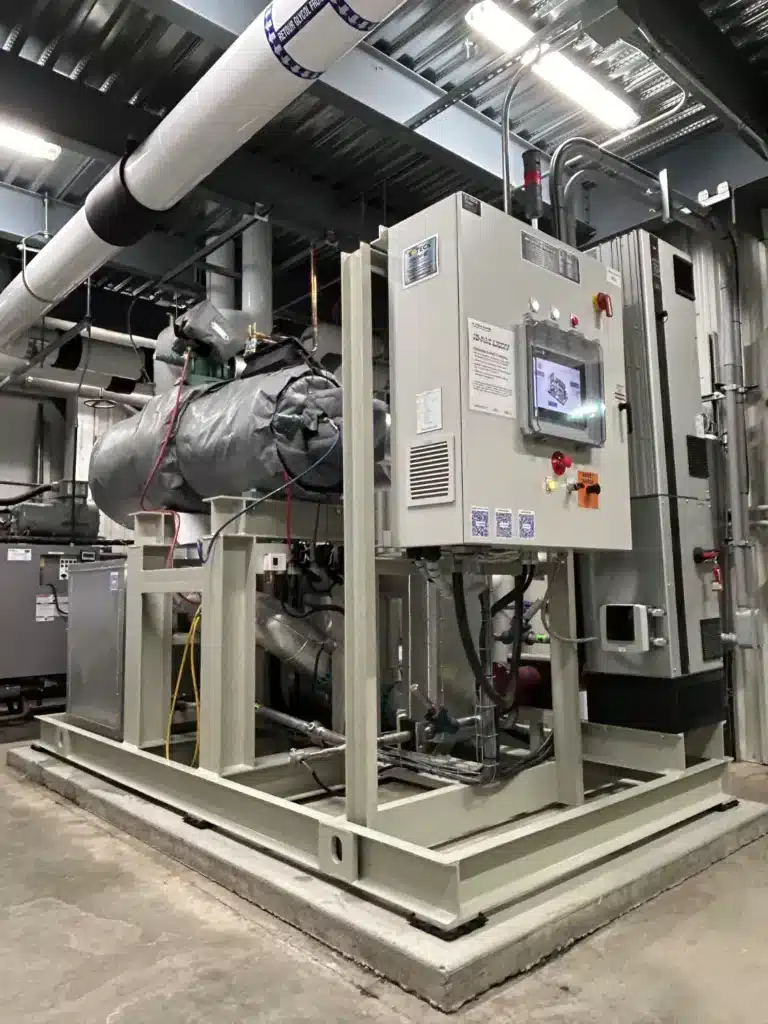
In a manufacturing or food-processing plant, energy is one of the largest expense items, often ranking third behind raw materials and labour, according to several Quebec and Canadian sector-specific analyses. Your fossil-fuel-fired boilers (natural gas, fuel oil, propane) often operate continuously, while your refrigeration systems release significant amounts of heat into the atmosphere. This represents a source of savings that is all too often overlooked. A properly sized industrial heat pump changes this equation: it captures this otherwise wasted energy and feeds it directly back into your processes and your building.
This approach is fully in line with the recommendations of the CQ3E’s Manifesto on the Decarbonization of Buildings in Quebec, which emphasizes that successful decarbonization depends first on reducing energy needs and then on the judicious electrification of processes. Heat recovery using industrial heat pumps is one example of this strategy. To learn more, follow this link.
This guide covers the essentials for making an informed decision: types of systems, technical specifications to compare, realistic costs, incentive programs available in Quebec in 2026, and criteria for choosing the right integrator.
No abstract theory: just what a decision-maker needs to know before committing to a project.
THE THREE TYPES OF INDUSTRIAL HEAT PUMPS
The fundamental difference between heat pumps lies in the energy source they use and the outlet temperature that each technology can achieve. Understanding these distinctions helps prevent the selection of an undersized solution for a demanding process.
Air-to-water or air-to-air heat pumps: versatile, but limited for industrial processes
This type of system captures heat from the outside air (primarily) and transfers it to a hot water loop or into the indoor air. It is the most accessible solution to install, requiring no complex infrastructure. Its efficiency drops significantly when outdoor temperatures fall below -15 °C, with an average Coefficient of Performance (COP) ranging between 1.5 and 2. The output temperature generally remains below 50 °C, which limits its use to heating buildings and preheating domestic hot water or process water. One way to optimize this type of heat pump is to extract heat not from the outside air, but from a warm area within the plant (e.g., mechanical room, exothermic production area, etc.). For an industrial process requiring 80 °C or higher, this technology is insufficient.
High-Temperature Water-to-Water Heat Pump: The Industry’s Choice
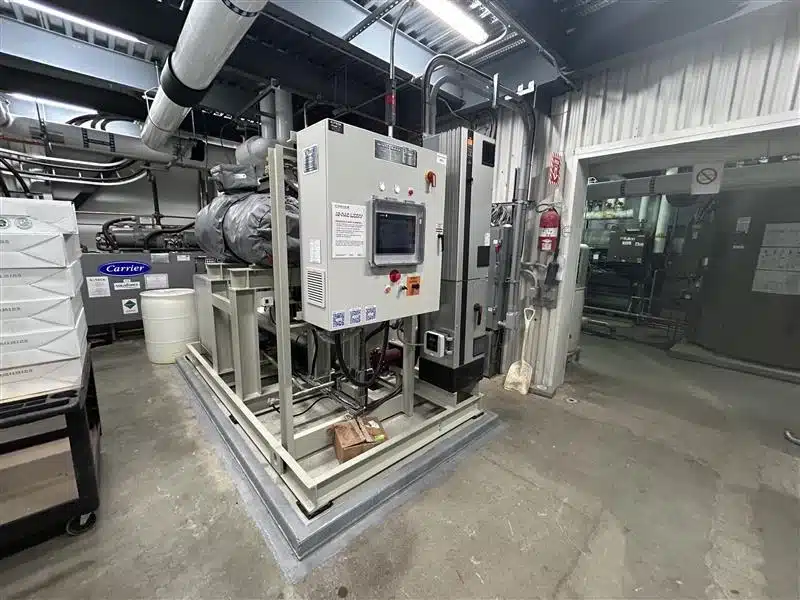
This is where the recovery of waste heat really comes into its own. This type of industrial heat pump extracts heat from an already hot source (waste heat from a refrigeration system, process water, wastewater), and recovers it at temperatures reaching 120 °C and higher.
Thanks to the higher and more stable temperature of the heat source, the COP remains between 3.0 and 5.0, significantly higher than that of air-to-water or air-to-air systems. For your food processing and manufacturing plants, this is the go-to solution: it can partially or completely replace a fossil-fuel boiler that produces hot water or steam for applications such as pasteurization, sanitation, sterilization, or boiler make-up water.
Ground-source geothermal energy: efficient, but complex in an industrial setting
This technology harnesses the heat stored in the ground to achieve a COP of 3.0 to 5.0, depending on installation conditions. The challenge lies in implementation: boreholes can reach depths of several tens of metres, resulting in high initial costs and significant site constraints. This system is better suited for commercial buildings and district heating networks than for energy-intensive industrial processes, where a high-temperature water-to-water heat pump offers better integration with existing systems.
Which industrial heat pump should you choose for a high-temperature process?
For any process requiring 80 °C or higher (pasteurization, sanitation, sterilization), the high-temperature water-to-water heat pump is the only one of the three types that is suitable: it reaches 120 °C, whereas the air-to-water type is limited to less than 50 °C.
TECHNICAL SPECIFICATIONS FOR SELECTING AN INDUSTRIAL HEAT PUMP
An industrial heat pump data sheet contains several key figures. Knowing how to interpret them correctly helps ensure that you don’t choose a system based on purchase price rather than actual performance.
COP and Maximum Temperature: What These Numbers Actually Mean
The COP (coefficient of performance) is the ratio of the thermal energy produced to the electricity consumed. A heating COP of 4 means that for every kilowatt-hour of electricity input, the system generates 4 kWh of heat. Under real-world industrial conditions, typical ranges vary from 2.0 to 5.0 depending on the type of system and operating conditions (primarily the system’s cold and hot temperatures).
The maximum outlet temperature is the second critical parameter: it determines whether the heat pump can replace a boiler in your process. The target is generally between 85 °C and 120 °C, depending on the application. These two values, COP and outlet temperature, must be evaluated together, as an improvement in one often comes at the expense of the other.
A heat pump is a refrigeration system that is more sensitive than those used for cooling. Operating these systems at high temperatures pushes the components (compressors, heat exchangers, etc.) close to their mechanical limits and the fluids (refrigerants and lubricating oil) close to their thermal limits. We caution against operating a off-the-shelf heat pump at its maximum temperature: it is important to verify the mechanical and thermal limits of these components based on the source and operating temperatures, as well as their stability.
Low-GWP refrigerants: R-1233zd, R-1234ze, NH₃, CO₂…
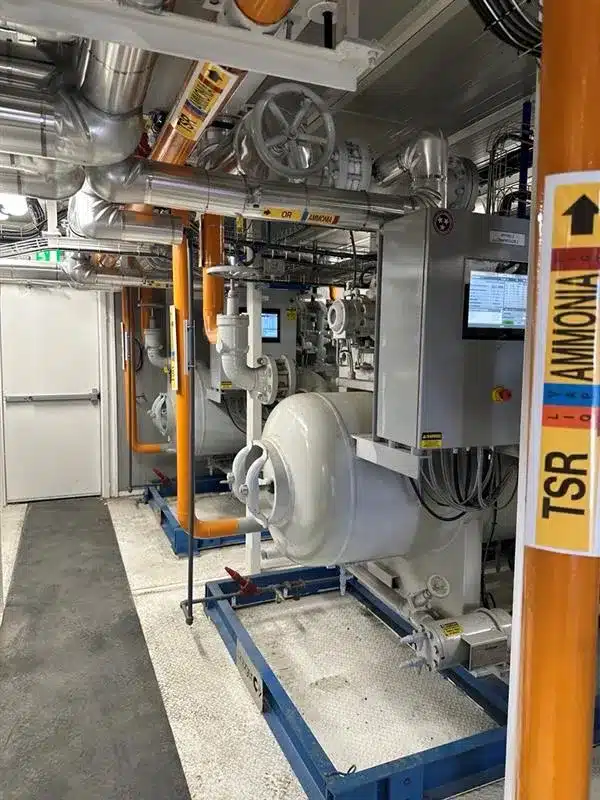
The choice of refrigerant has both technical and regulatory implications. In 2026, the preferred refrigerants for Canadian industrial applications are R-1233zd, R-1234ze, NH₃, CO₂, all of which have a GWP below 10 for temperature ranges from 60 °C to 90 °C, and CO₂ (R744, GWP = 1) for temperatures exceeding 100 °C.
For an overview of low-GWP refrigerants and their impact on HVAC and refrigeration systems, this document is a useful resource for comparing technical and regulatory options.
From a regulatory standpoint, restrictions on HFCs with high global warming potential (GWP) are gradually tightening in both Canada and Quebec, with specific thresholds and deadlines evolving in stages. Choosing a low-GWP refrigerant today means protecting your investment against anticipated regulatory obsolescence.
Sizing an Industrial Heat Pump: The Variable That Is Often Overlooked
Capacity in kilowatts, operating temperatures, required flow rate, and compatibility with existing equipment have a decisive influence on the product, the technology, and therefore the actual ROI of a project. Industrial facilities in the food processing sector generally range from 50 kW to 2 MW, depending on the size of the plant and the nature of the processes. Incorrect sizing costs more than even the best equipment that is poorly integrated. This is precisely why an industrial energy efficiency audit conducted by a specialized engineer is essential before making any off-the-shelf purchases.
What COP should you aim for to ensure a cost-effective industrial heat pump?
A COP higher than 3.5 at your plant’s actual operating temperatures generally indicates a viable project. The pitfall: evaluating the COP at the catalog’s rated point rather than at your actual operating range, where it can drop significantly.
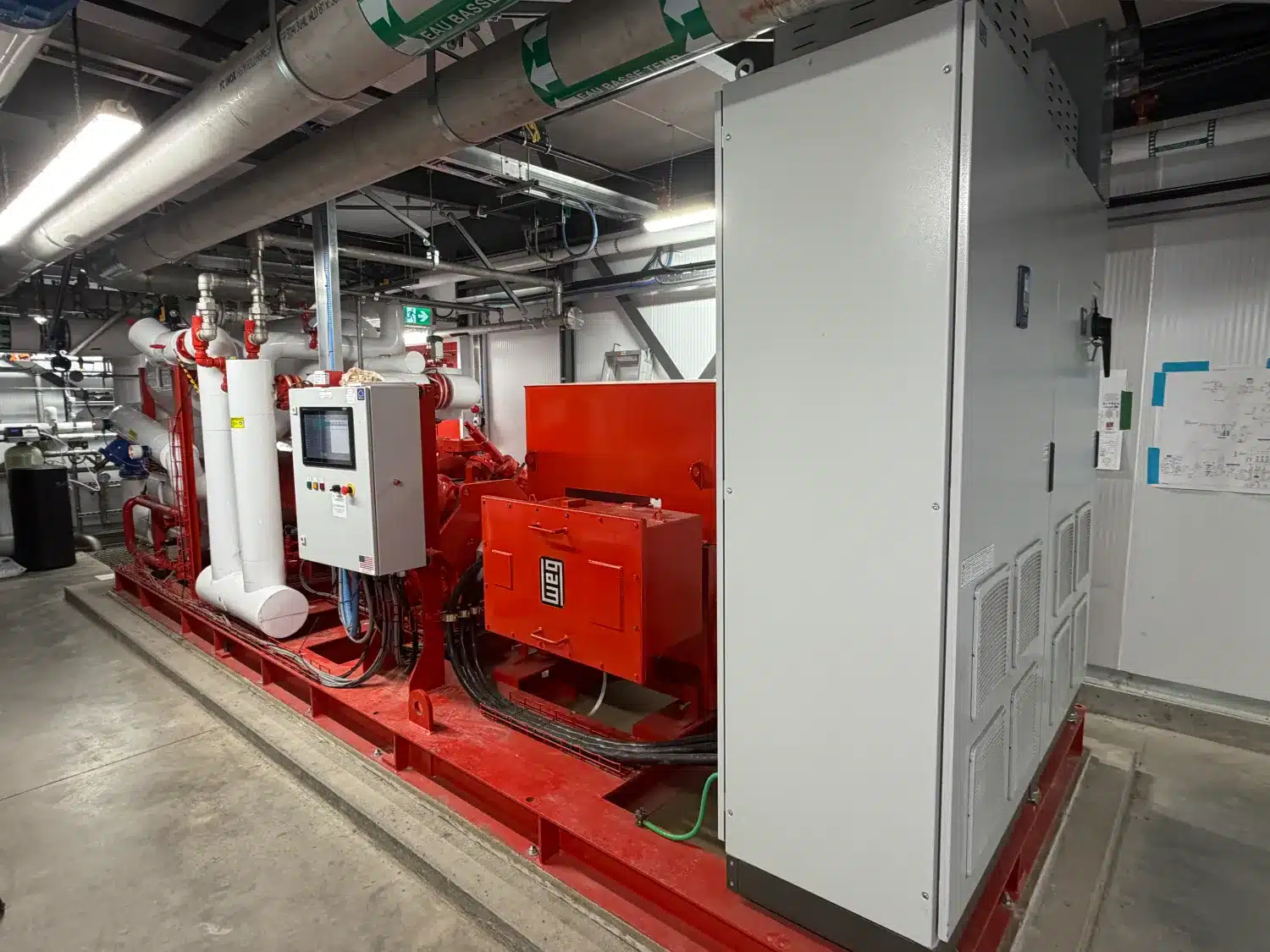
IN WHAT APPLICATIONS IS AN INDUSTRIAL HEAT PUMP TRULY ESSENTIAL?
Cost range based on the size and complexity of the project
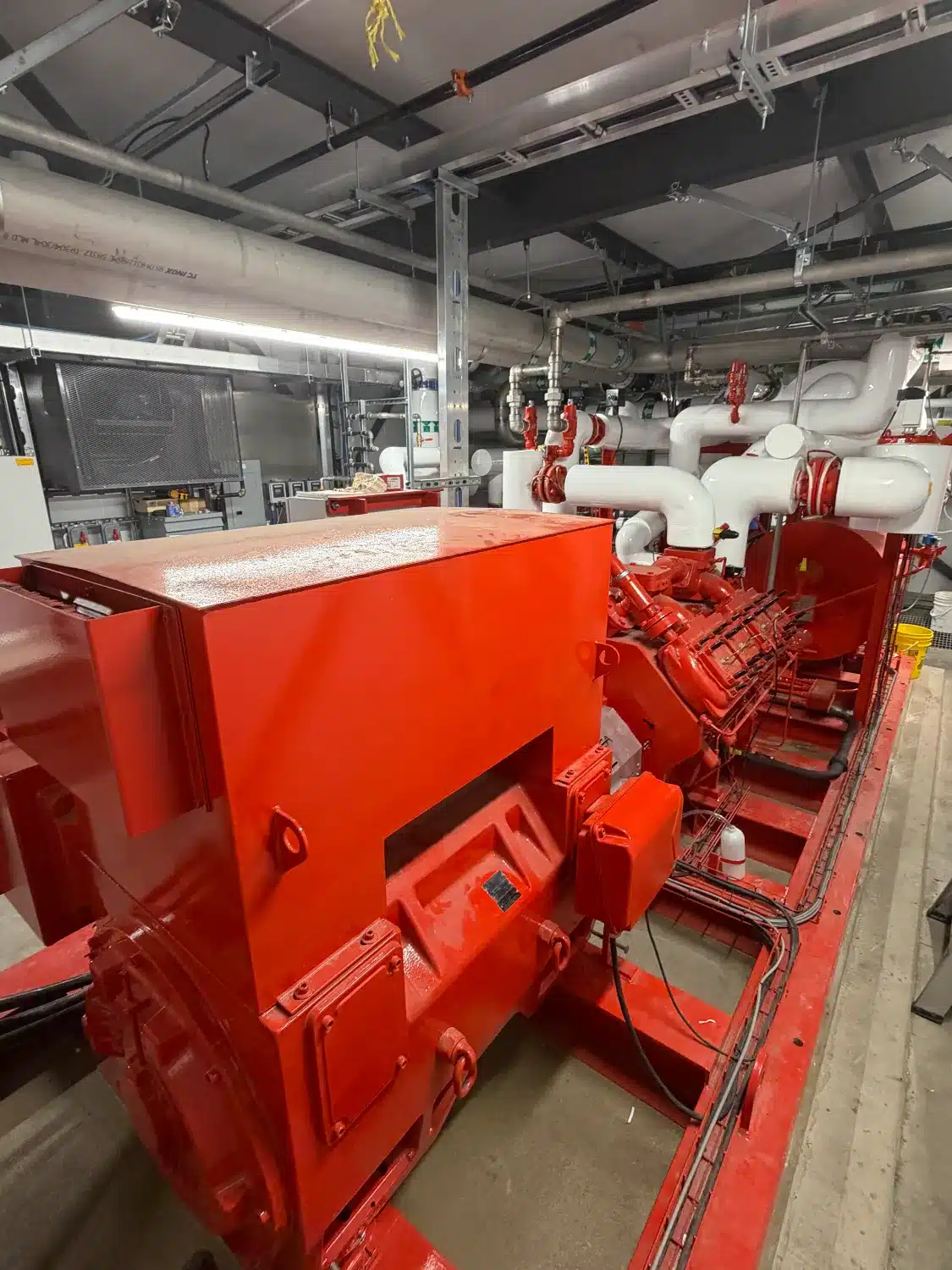
An industrial system consistently costs more than $50,000 and can reach several hundred thousand dollars, depending on the capacity in kW, the target temperature, the type of refrigerant, and the required integration. These figures are approximate; an engineering estimate is still required for any specific project. They contrast sharply with residential figures ($2,300 to $17,500) that are readily available online. The variables that cause the greatest fluctuation in industrial costs are access to the existing heat source, civil engineering work, and the level of automation integrated into the system.
Why industrial projects pay back faster than residential ones
The payback period for industrial applications is often between 3 and 5 years, and sometimes less, depending on the conditions. The volumes of heat treated are massive, the energy costs saved are proportional, and incentive programs significantly reduce the initial investment.
Documented examples in the agri-food sector show payback periods of approximately 1.3 years for a Canadian fish farm using an ammonia heat pump, 2.7 years in the Canadian poultry processing industry, and 4 to 5 years for a Dutch slaughterhouse. These data come from case studies compiled by the International Energy Agency and provide a representative order of magnitude, although conditions in Quebec, including tariffs, climate and regulations, may cause the results to vary.
Source: International Energy Agency, *Application of Industrial Heat Pumps*, IEA Heat Pump Programme Annex 35/IETS Annex 13, Task 4: Case Studies, Final Report, 2014, Tables 1-2 and 1-7.
Sources: IEA, Application of Industrial Heat Pumps, Annex 35 Task 4: Case Studies (PDF). IEA, Application of Industrial Heat Pumps, Annex 35 Part I (PDF)
A contractual performance guarantee makes it possible to accurately model this ROI before committing, which eliminates the uncertainty that often holds decision-makers back.
How long does it take for an industrial heat pump to pay for itself?
In the food industry, the payback period is often between 3 and 5 years, sometimes less. The amount of heat recovered is enormous, and the incentives reduce the initial investment accordingly.
2026 INCENTIVES IN QUEBEC AND CANADA FOR MANUFACTURERS
Hydro-Québec’s Solutions efficaces Program: Up to 75% of Eligible Costs
In 2026, Hydro-Québec’s “Solutions efficaces” program is the primary source of financial assistance for industrial heat pump projects. Under the current eligibility criteria, it covers up to 75% of eligible costs for most businesses (G9, M, L, and LG rate classes).
What’s Also Available
The Écoperformance program of the Ministry of the Environment, Climate Change, Wildlife, and Parks (MELCCFP) is one of the main financial tools for supporting industrial projects aimed at reducing energy consumption and greenhouse gas emissions. Depending on the project’s characteristics, it can help fund eligible studies, construction work, and equipment.
For projects that involve reducing natural gas consumption, Énergir’s Implantation program offers an attractive financial incentive.
CHOOSING THE RIGHT ENGINEERING PARTNER FOR YOUR PROJECT
What a Good Integrator Should Be Able to Offer You
A reputable integrator must be able to conduct a preliminary energy audit, have expertise in natural and low-GWP refrigerants, manage the project from start to finish using a design-build approach, and provide you with tools for real-time performance monitoring. The most telling criterion is their ability to make a contractual commitment to results, including a return on investment (ROI), rather than simply providing you with estimates. Incorrect sizing from the outset compromises both the ROI and the system’s lifespan.
A competent integrator must, in particular, be able to bring in an energy efficiency engineer to oversee the audit and ensure the project’s technical and financial compliance.
Our contractual performance guarantee on every heat recovery project
We are among the system integrators in Canada that offer a contractual energy performance guarantee on industrial heat pump and waste heat recovery projects. With more than 110 experts based in Victoriaville, Montréal, and Trois-Rivières, we combine over 30 years of Quebec expertise with the strength of the international Clauger Group to manage complex projects from start to finish.
Our support is structured around three tools that are used sequentially throughout the project. The Flash Audit serves as the starting point: a comprehensive energy assessment conducted in a single day to identify potential savings and available incentives. Once savings targets have been identified, our MyPortal3E (SIGE) platform centralizes consumption data and enables continuous tracking of ROI. At the same time, our financial engineering department handles the preparation of applications for Hydro-Québec and federal programs. Contact our team for a no-obligation initial assessment.
Is it possible to get a incentive for an industrial heat pump in Quebec in 2026?
Yes. Programs offered by Hydro-Québec, the MELCCFP, and Énergir can cover up to 75% of eligible costs for qualifying businesses. The assistance applies to studies, equipment, and construction work, provided that a complete technical proposal is submitted.
WHAT YOU NEED TO KNOW BEFORE MAKING A DECISION
For industrial processes, the high-temperature water-to-water industrial heat pump is the preferred technical solution. It is the technology best suited to achieving the temperatures required by food processing and manufacturing applications, with a COP that justifies the investment.
Prioritize low-GWP refrigerants (R-1233zd, R-1234ze, NH₃ and CO₂) based on the target temperature, to protect your system from future regulatory changes. As a general guideline, a COP greater than 3.5 typically indicates a viable project; do not model the ROI without factoring in available incentives.
In 2026, incentive programs offered by Hydro-Québec, the Ministry, and Énergir cover up to 75% of eligible costs for qualifying businesses. This financial incentive remains underutilized by a large portion of Quebec’s industrial sector. Before investing in an industrial heat pump, conduct a Flash Audit with us to assess your actual heat recovery potential and quantify the savings before making any commitments.
Article written in collaboration with our expert:

Pierre Delorme, B.Eng. (PRT), energy development expert at Soteck Clauger since 2022. Starting as a refrigeration technician and going on to earn his engineering degree from INSA Strasbourg, he has over 10 years of experience in NH₃ and CO₂, heat recovery, and energy audits. He translates each assessment into measurable, cost-effective, and sustainable gains for your plants.
Industrial Heat Pumps: Answers to Our Most Frequently Asked Questions
These questions come up in almost every plant we visit, from the production manager to the project engineer. We’ve compiled them here, along with straightforward answers, to help you make a decision before you even call us. If your question isn’t listed here, a Flash Audit remains the fastest way to get a figure specific to your facility.
1: What is an industrial heat pump, and why should a plant install one?
An industrial heat pump captures wasted heat (heat exhaust, condensate, process water) and recycles it into your processes to replace or reduce the use of a gas boiler. It helps reduce energy costs and emissions while recovering energy that was previously wasted. This guide focuses on practical solutions for manufacturing and food-processing plants.
2: What are the practical differences between air-to-water heat pumps, high-temperature water-to-water heat pumps, and ground-source geothermal systems?
The air-to-water heat pump is the simplest to install but has limited temperature capabilities (output generally <50 °C), and its COP drops below -15 °C (1.5 to 2). The high-temperature water-to-water heat pump draws from already hot sources and can reach 120 °C+ with a COP of 4.0 to 5.0, making it suitable for industrial processes. Ground-source geothermal systems have a comparable COP (4.0 to 5.0) but require deep drilling and involve high initial costs, so they are less suitable for energy-intensive processes.
3: Can a heat pump replace a gas boiler for processes at 80 °C or higher?
For applications requiring temperatures of 80 °C or higher, a high-temperature water-to-water heat pump is the ideal solution: it can reach 120 °C and partially or completely replace a gas boiler in applications such as pasteurization or sterilization. In contrast, air-to-water heat pumps generally do not provide the necessary temperatures and are not recommended for these processes.
4: What technical specifications should you compare before choosing an industrial heat pump?
Compare the COP with actual operating temperatures, maximum outlet temperature, stability, and heat source (process water, condensate, groundwater), as well as the possibility of integrating the system into existing circuits. Include an analysis of capital and operating costs, planned maintenance, and warranties to avoid basing your decision solely on the purchase price.
5: How can you determine the actual COP of a heat pump under industrial conditions?
Evaluate the advertised COP across the temperature range in which your plant will operate, not just at the standard rated point. Verify the thermal stability of the heat source (the more stable the source, the better the COP); request real-world case studies or test campaigns; and require simulations or energy balance calculations from the system integrator.
6: What are the main disadvantages of ground-source geothermal energy for a plant?
The main obstacle is the cost and complexity of drilling, which can reach depths of up to 100 metres and impose significant site constraints. In practice, ground-source geothermal energy is often better suited for commercial buildings and district heating systems than for intensive industrial processes requiring direct integration into production systems.
7: Are there any incentive programs in Quebec in 2026 for the installation of industrial heat pumps?
Yes, the guide states that incentive programs will be available in Quebec in 2026. To take advantage of these programs, prepare a technical proposal (energy audit, sizing, and projected savings); the incentive programs offered by Hydro-Québec, the Ministry, and Energir provide funding for up to 75% of eligible costs for qualifying businesses.
Note to the reader: The figures presented in this guide and in the FAQ (costs, COP, payback period, recovery rates, and incentive amounts) are provided for informational purposes only and may vary significantly depending on the specific conditions of each installation. Information on financial assistance programs and regulations was verified as of July 1, 2026; since these programs and requirements change regularly, please verify the current conditions and obtain an engineering estimate from the relevant organizations and professionals (Hydro-Québec, the Government of Quebec, the Government of Canada) before making any decisions.