
Air treatment for cheese plants: master the aging process
Air treatment excellence for the cheese industry from coast to coast

30 years of expertise serving cheese plants
For over three decades, Soteck Clauger has been helping Canadian cheese plants optimize their production environments. Our unique expertise combines hygienic air treatment and energy efficiency to guarantee:
- Consistent quality and impeccable food safety;
- Optimal reduction of your energy costs;
- Customized solutions adapted to each stage of your production.
The result: more efficient, more profitable cheese plants.
Integrated solutions for every stage of the cheese-making process
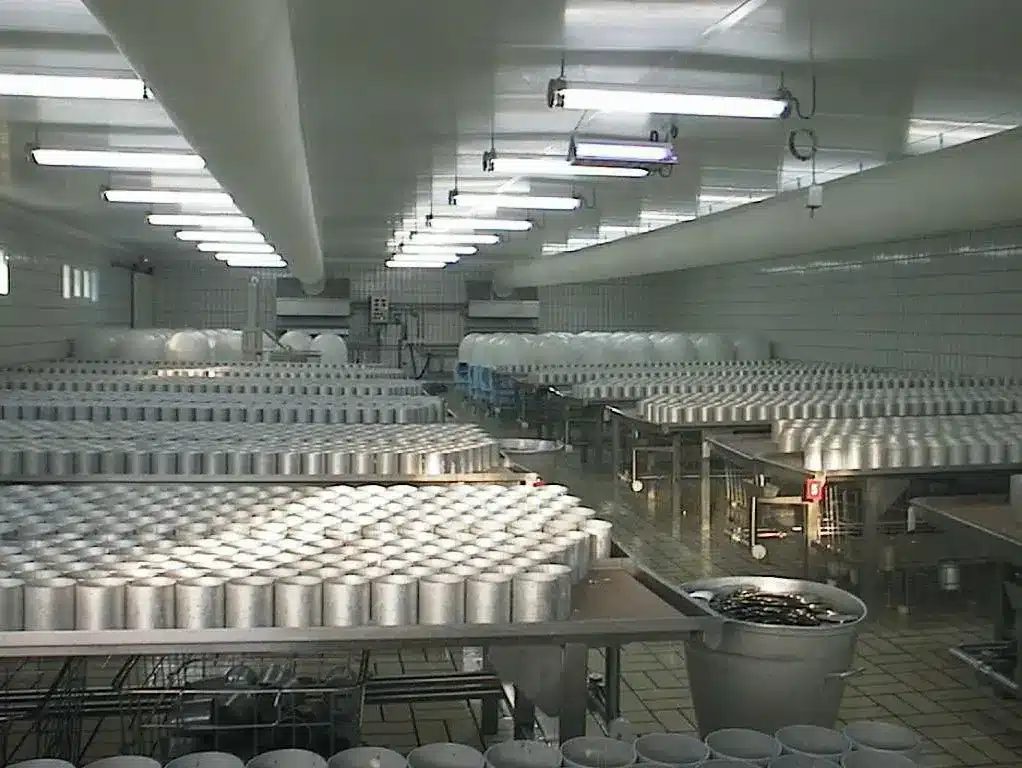
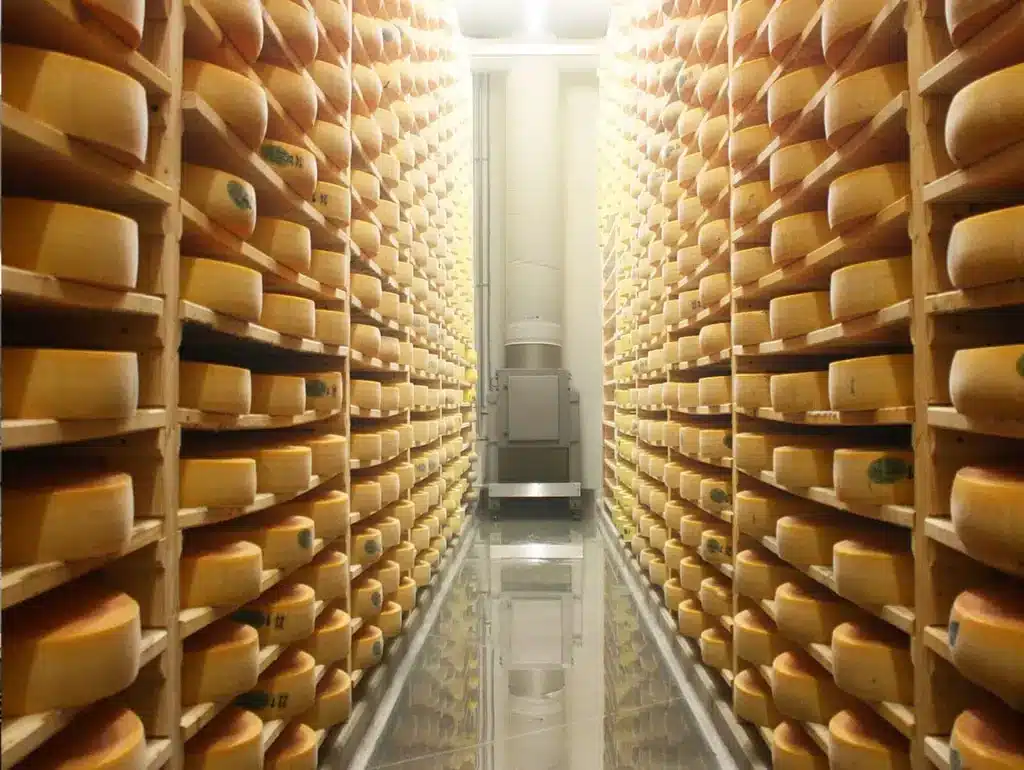
Our air treatment solution for cheese plants helps reduce cheese loss during aging. We provide humidity control in the aging room and ventilation for the aging room tailored to the types of cheese produced. Our expertise in industrial refrigeration for cheese-making also helps maintain stable environmental conditions and control energy costs.
We work precisely across all the critical phases of your production. From manufacturing to packaging, each zone is optimally controlled:
- Manufacturing and aging: temperature and humidity controlled to the degree;
- Drying and rind care: elimination of contamination risks (mucor, blue);
- Packaging: stable environment guaranteeing final quality.
How? With an integrated approach that’s unique in the industry.
Measurable performance and proven durability
Our systems deliver concrete, measurable results for your business. Food safety becomes a certainty thanks to rigorous control of ambient conditions.
- Precise temperature and humidity control
- Air mixing rate that creates a uniform environment
The result is less weight loss in your ripened cheeses and greater protection against contamination.
Clauger has always been able to innovate and adapt its technical solutions to meet every customer need:
- Control the right environmental conditions for cheese production
- Reduce shrinkage, downgrading and material losses
- Control cooling rates
- Continuous airflow management to guarantee forward product flow
- Control the risk of airborne contamination (mucor, blue, etc.) or help with crisis management
- Reduce your site’s energy bill
That’s why the leaders in the cheese-making industry put their trust in us.
The unique alliance that makes all the difference
Why Soteck Clauger? Because we’re the only ones to combine recognized food and beverage expertise with advanced technological innovation.
Our commitment:
- Solutions 100% tailored to your specific production constraints;
- Complete support from design to optimization;
- Contractual performance guarantee on your savings;
- Technical support available 24/7 for your peace of mind;
Imagine production without compromising on quality.
Tradition and innovation for your success
Team up with us and turn your challenges into opportunities. Our vision: to combine traditional cheese-making know-how with state-of-the-art hygienic air treatment technologies to maximize your profitability. The cheese plants that choose us see an average improvement in their operational efficiency from the very first year. Your production deserves excellence. We make it accessible and profitable quickly.
FAQ: the right environment to protect the quality of your products
Rapid cooling, air control, and energy efficiency are key to the quality of your yogurts, dessert creams, and processed cheeses.
Here are the questions cheesemakers ask us most often, along with practical answers: target temperatures, equipment selection, and signs that indicate a process needs to be analyzed in depth.
How can you reduce cheese shrinkage in an aging room?
Weight loss is primarily due to water evaporation during aging. It increases when the air is too dry, too cold, or moves too quickly.
Temperature, relative humidity, and air circulation must remain uniform. Variations between carts can result in uneven weight loss.
Soteck Clauger analyzes the actual conditions in the aging room and operating practices. The solution is then tailored to the cheese, its stage of aging, and the storage method.
Why is relative humidity important in a cheese plant?
Relative humidity directly affects water loss, texture, and appearance in cheese. It must be adjusted to suit the product and its stage of aging.
Air that is too dry increases shrinkage and can cause the rind to harden prematurely. Air that is too humid, on the other hand, promotes condensation and certain microbiological imbalances.
An efficient control system maintains setpoints even when doors are opened. It also takes into account variable loads, cleaning cycles, and the presence of staff.
How do you choose an air treatment solution for an aging room?
The choice depends on the type of cheese, storage capacity, and the desired aging conditions. Each aging room has its own constraints in terms of volume and airflow.
The solution must address cooling, humidification, filtration, and air distribution. The setpoints must also remain consistent across the various storage areas.
An on-site study helps identify variations in ambient conditions and sources of loss. It then allows equipment to be sized according to actual production needs.
Why is air circulation crucial in an aging room?
Poor air distribution creates cold, dry, or inadequately ventilated areas. These variations can compromise the uniformity of the aging process and the final quality. A direct stream of air blowing onto the cheeses accelerates the drying of their surfaces. A well-designed airflow system, on the other hand, promotes gentle and even air movement. The design must take into account shelving, carts, and service aisles. It must also be adaptable to changes in production volume or format.
How can you reduce the risk of airborne contamination in a cheese plant?
Air can carry particles, moisture, and contaminants between different areas. Controlling airflow reduces unwanted transfer within the plant. Manufacturing, aging, packaging, and washing areas present different levels of risk. Pressure levels, filtration, and air exchange rates must account for this reality. An analysis of airflow patterns helps identify areas requiring special attention. It also helps limit drafts coming from loading docks or less-controlled areas.
Is it possible to recover heat from the refrigeration equipment in a cheese plant?
Refrigeration equipment releases heat during normal operation. This energy can sometimes be recovered to meet certain on-site needs.
It can be used to heat buildings, preheat water, or supply certain processes. However, the potential depends on temperatures, operating schedules, and available applications. An energy analysis helps assess the feasibility of a heat recovery project. It must weigh the expected benefits against the investment costs and integration challenges.
What are the signs that an aging room needs to be modernized?
Variations in humidity, temperature, or weight between batches are important indicators. A rise in energy costs may also signal a less efficient installation. Recurring condensation, insufficient capacity, and quality issues must be investigated. These situations can affect yields, consistency, and production timelines. Modernization may involve equipment, control systems, or air distribution. It may also accompany the addition of new production areas or new cheese formats.
Does Soteck Clauger support cheesemakers in Quebec and Eastern Canada?
Soteck Clauger supports cheese plants with air treatment and industrial refrigeration solutions. The approach takes into account quality, capacity, and energy consumption objectives. The process may begin with an analysis of environmental conditions and production needs. It may include the design, installation, commissioning, and optimization of equipment. The solutions are tailored to production, drying, aging, and packaging rooms. They are designed to support process stability and control of operating conditions.
How much is shrinkage really costing you in your aging room?
Shrinkage is measured before being corrected, batch by batch. Batches are weighed upon entry and exit. Relative humidity and air velocities are then recorded for each cart. The Flash Audit completes this tour of the aging room in one day, with no obligation.
Reducing cheese shrinkage comes down to three factors: air that is too dry, too cold, or moving too quickly. Each of these draws moisture from the surface of the rind, day after day. Reducing cheese shrinkage, therefore, hinges on consistency.
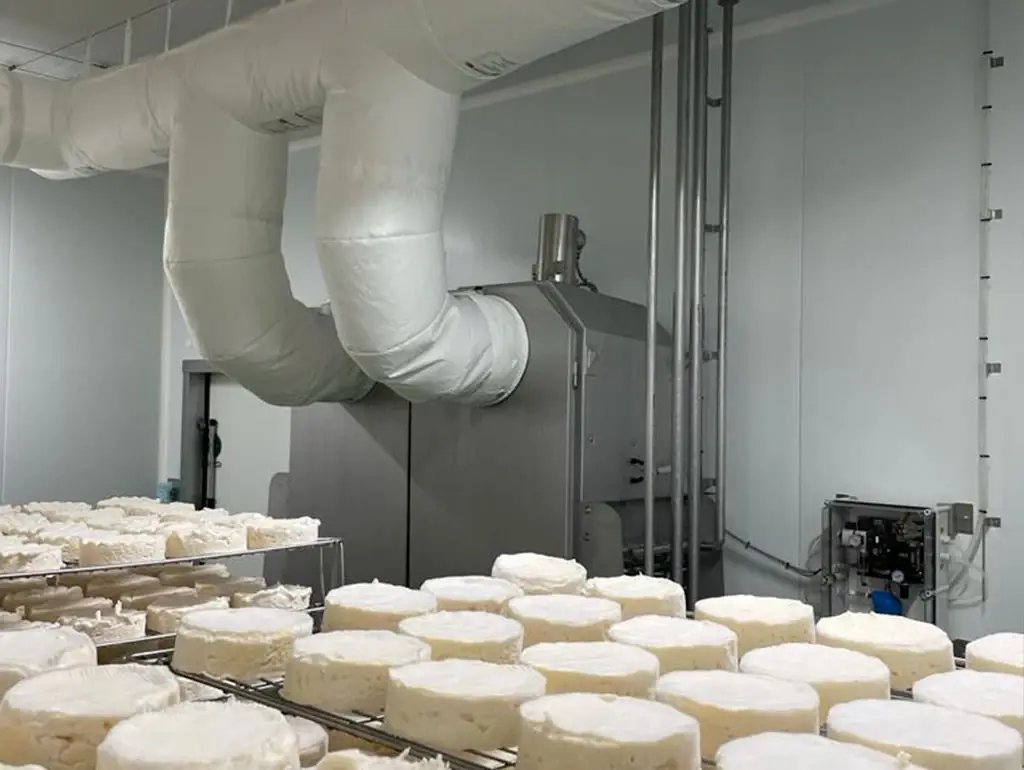
Humidity control in the aging room requires stable regulation. Opening doors and washing disrupt the set points. A Mini Fogger humidifies the room without causing droplets to form on the cheeses. The set point is adjusted according to the cheese and its stage of aging.
Humidity control in a cheese plant doesn’t stop at the aging room. The draining and packaging rooms also have their own target levels. Condensation occurs where the target levels conflict. This is corrected by adjusting the pressure between zones, not by increasing the fan speed.
Ventilation in a aging room is designed rack by rack. A direct airflow dries the cheeses in the first row. Ventilation in the aging room is designed to create gentle, even air movement. Fabric ducts distribute the airflow without blowing directly on the product.
Refrigeration systems for cheese-making do more than just cool the aging rooms. They also serve the draining rooms and the chilled process water. Industrial refrigeration systems for cheese-making are sized based on your actual peak loads. The waste heat from the condensers can be used to preheat the plant’s wash water.
Poor humidity control can cost you throughout an entire season. Every kilo lost to shrinkage is never recouped in your profit margin. Have our experts assess the conditions of your aging rooms. They’ll calculate the potential savings and then commit to those results with a written performance guarantee.