
Meat and cured meats: take control of your production
An air treatment and ventilation solution designed specifically for the meat processing and cured meat industry

An up-to-date food industry
Market evolution demands putting the product back at the center of concerns. Environmental responsibility has become an absolute priority for your industry. At Soteck Clauger, we respond to these challenges with comprehensive and innovative solutions:
- Safe products through complete control of hygiene conditions;
- Energy consumption optimized up to 45%;
- Reduced environmental impact of your processing plants.
Your partner for modern, responsible production.
Precise environmental conditions for the productionof your meats and cured meats
Our ventilation solutions for meat processing and curing meet production, quality, and energy efficiency requirements. They combine needs analysis, control of technical parameters, equipment integration, and optimization of operating conditions. This approach allows us to tailor solutions to your site’s processes, volumes, production areas, and priorities.
Our unique expertise combines food safety, energy efficiency and respect for the environment. This integrated approach transforms your regulatory constraints into competitive advantages.
We support the meat, charcuterie and cured meats industries in their drive towards operational excellence. Our secure, eco-friendly solutions meet the most stringent standards. Industry leaders choose us for this global vision of their production.
Specializedexpertise
We develop solutions tailored to each processing sector:
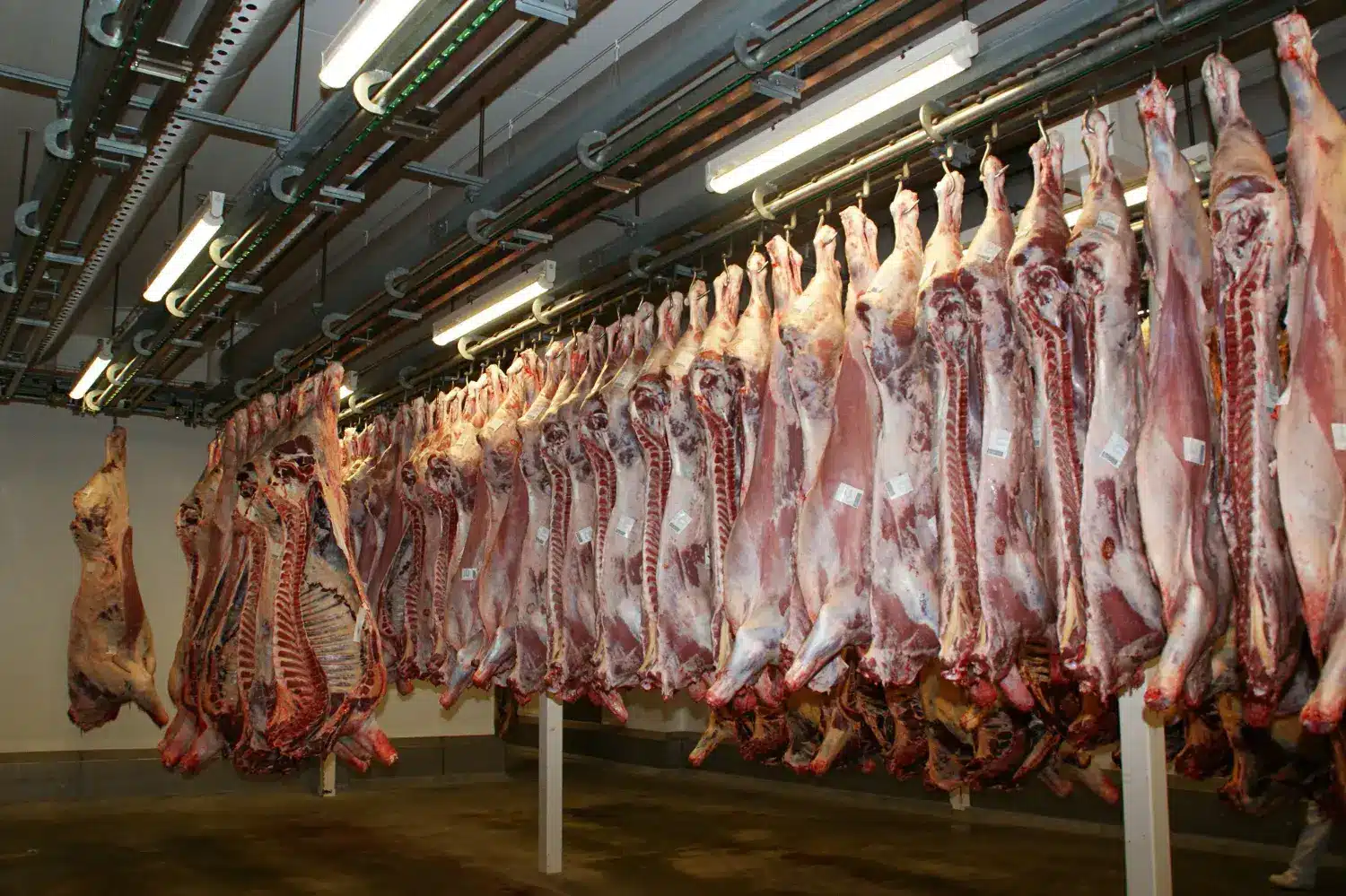
- Slaughterhouses: controlled slaughter halls, maturation and blast freezing;
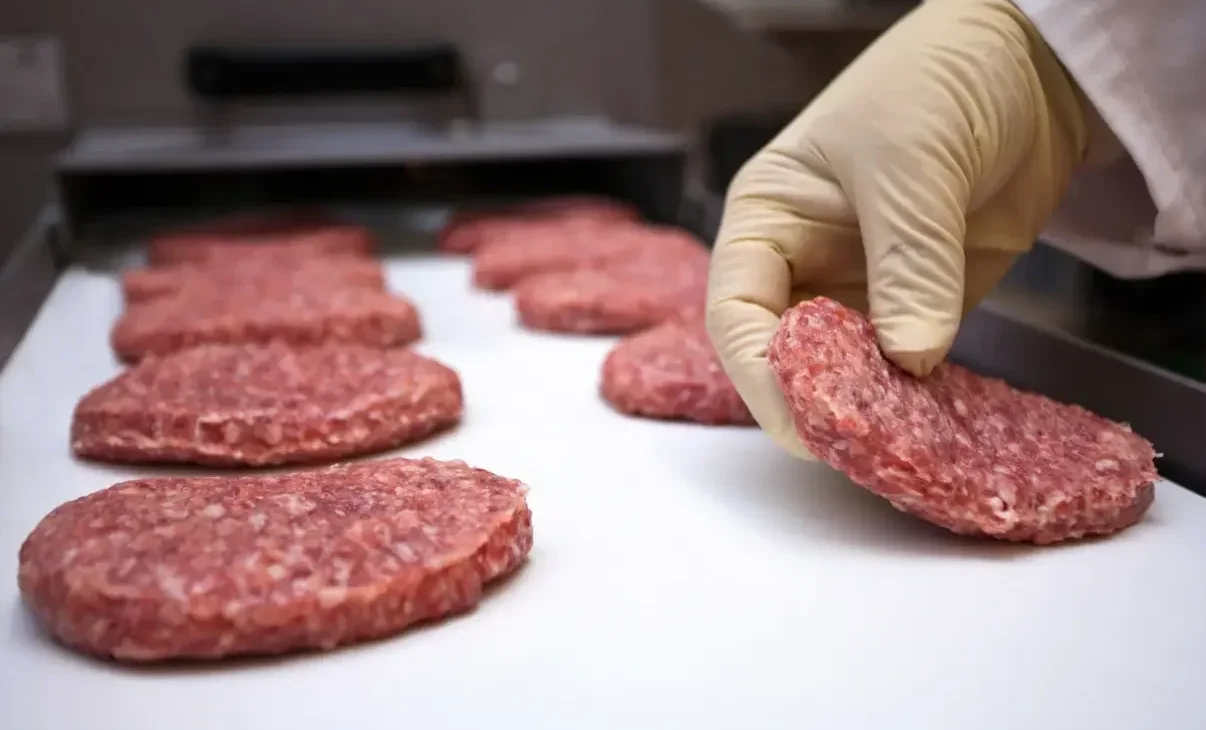
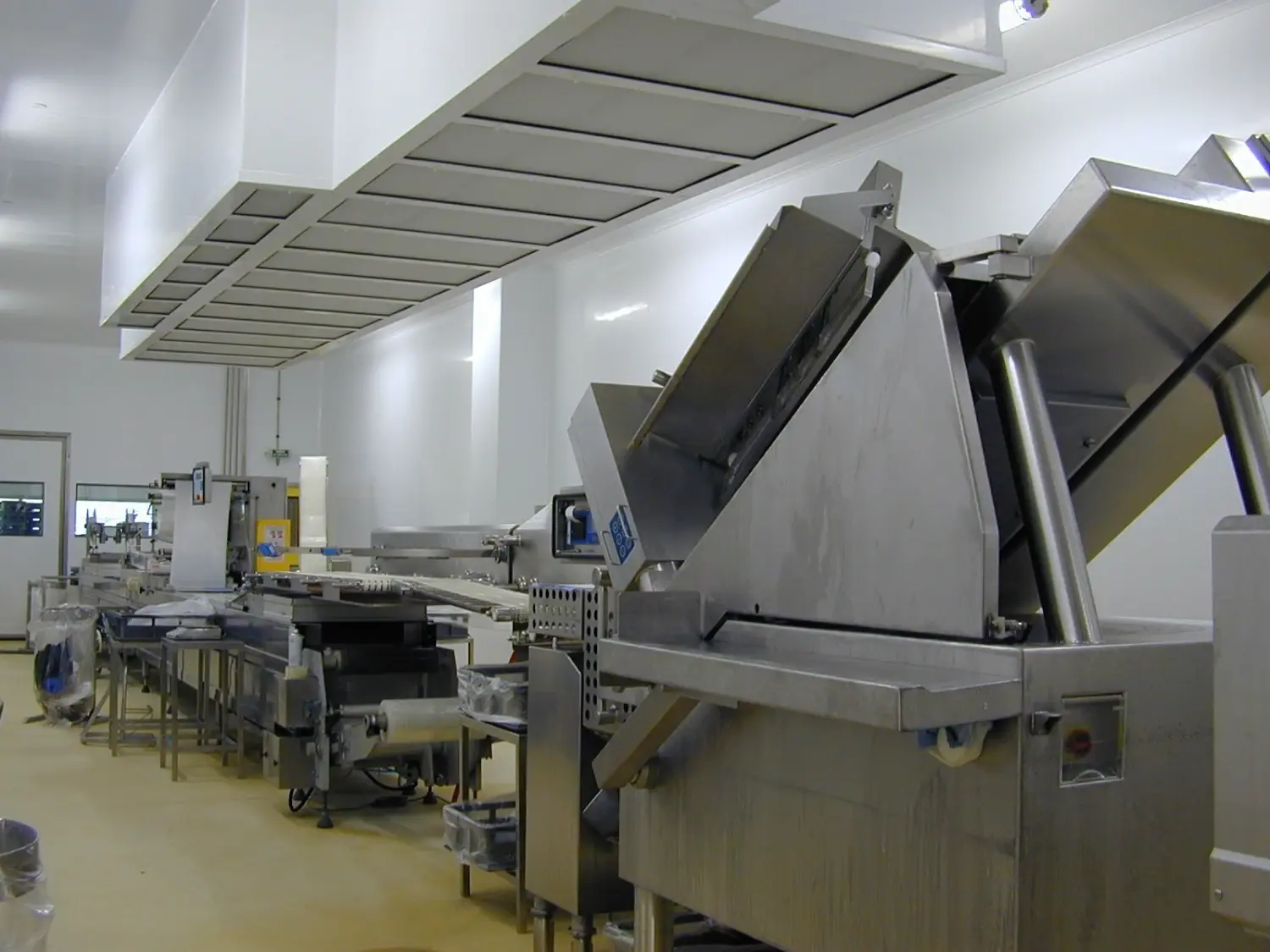
- Charcuterie: ISO 5 to 7 clean rooms, rapid cooling, surface hardening;
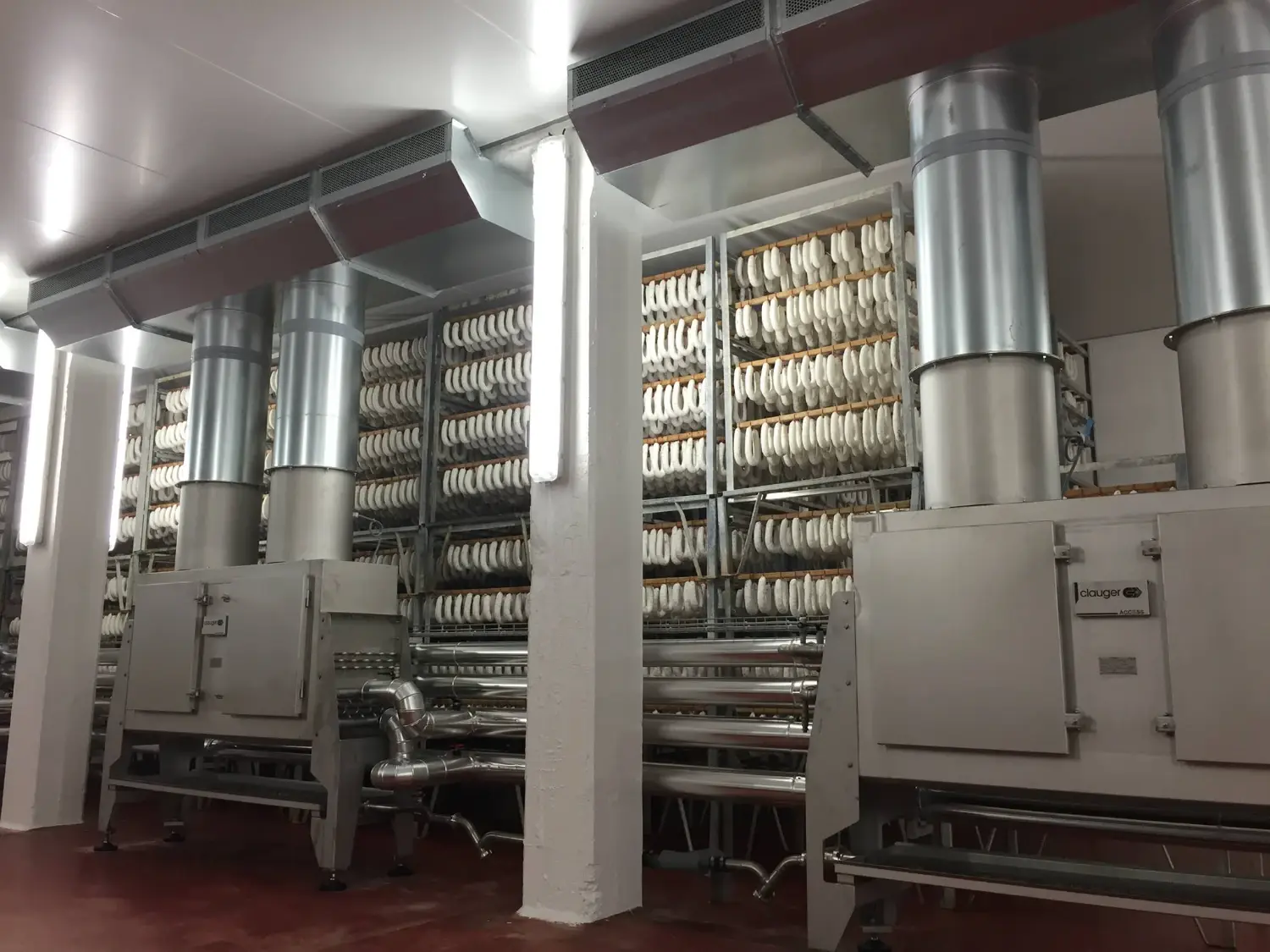
- Cured meats: complete ham and sausage processes (salting, drying, aging).
Controlling air flow, temperature and humidity guarantees optimum quality and yields.
Eco-responsible technologies for sustainable plants
We integrate innovative solutions to limit your environmental impact. Recovering and reusing waste heat considerably reduces your consumption.
Odour treatment improves the community acceptance of your operations. The use of natural refrigerants NH₃ and CO₂ reduces your carbon footprint. This comprehensive approach generates energy savings of up to 40%, while respecting the environment.
Intelligent performance management
Our support goes beyond equipment to optimize your entire plant. Thanks to our advanced digital tools, you can monitor your efficiency in real time. Continuous analysis of your data guarantees a lasting reduction in consumption. We contractually commit to your multi-year energy performance.
This 360° vision modernizes your installations, guaranteeing safety, performance and durability.

Compliance + energy efficiency
Our airflow audits qualify your system against Canadian standards while identifying energy savings. One audit, two measurable benefits.
Practical solutions to your operational challenges and questions
In meat processing and curing plants, each curing room, cold storage room, and aging room has its own specific requirements for temperature, humidity, and airflow. Here, our specialists address the questions most frequently asked by production and maintenance managers: humidity control, odour reduction, condensation in cold zones, and heat recovery.
How do you optimize air control in meat and charcuterie plants?
You can’t correct an environment you haven’t measured. So everything starts with the actual conditions recorded on-site: temperatures, humidity, and air velocities, zone by zone, during the hours when production is actually underway. From the butchery to the hanging stations, including the drying rooms, the cold storage room, and the aging room, each room has its own function, thermal load, and expected outcome: a single system cannot serve them all. Our airflow management audits assess the system’s compliance with Canadian standards, identify deviations zone by zone, and quantify the potential energy savings.
How can you optimize ventilation in a curing room?
A curing room is controlled by the three factors of temperature, relative humidity, and air velocity, from salting through drying to aging. First, the actual loads, cycles, and air mixing rates are analyzed, and then the airflow distribution is adjusted to eliminate dead zones. Airflow through fabric ducts distributes the air without disturbing the products, safeguarding the complete ham and sausage processes.
How can you optimize humidity in charcuterie production?
In the meat processing industry, humidity is controlled using cold, not against it. We combine solutions such as ISO 5 to 7 clean rooms, rapid cooling, and surface hardening to maintain stable conditions after cooking. Controlling fresh air intake, pressure differentials between zones, and defrost cycles minimizes fluctuations in humidity. The result is consistent quality from one batch to the next and improved shelf life.
How do you control odours at a meat processing plant?
A complaint from a neighbour costs more than a well-designed capture system.
We treat odours at the source first: exhaust hoods and extraction arms above cookers, rendering vats, and cutting stations, with sufficient extraction rates to prevent odours from escaping into the surrounding air.
Next comes the pressure cascade between the contaminated and clean zones, followed by treatment of the exhaust air, which may involve scrubbing, activated carbon, or biofiltration, depending on the nature of the compounds. The system is sized based on the measured flow rates and the actual discharge height. You reduce perceived discomfort without wasting energy on excessive ventilation.
How can you reduce condensation in cold areas?
Condensation never occurs by chance: it results from temperature differences between areas and poorly controlled airflow. We first measure the air velocities in contact with the products and the heat transfer between the cold room and adjacent areas, then we adjust the airflow distribution to eliminate cold spots. A well-designed fabric duct distribution system distributes air throughout the entire length of the room, without direct airflow onto the meat or drafts blowing on workers’ backs.
How can a meat processing plant optimize heat recovery?
Recovering and reusing waste heat significantly reduces energy consumption at a meat processing plant. Heat from NH₃ and CO₂ refrigeration systems is used to preheat water, fresh air, or process systems. Our Hi-PAC 85 industrial heat pumps running on R1233zd take energy recovery a step further. Combined with other measures, this comprehensive approach delivers energy savings of up to 40%.
Where should you start when modernizing a plant’s ventilation system?
Rarely does it involve a complete overhaul; more often, it’s a day of measurements. The no-obligation Flash Energy Audit quantifies your energy losses, potential savings, and the Hydro-Québec and Énergir incentives available. You’ll walk away with a step-by-step plan: distribution, control, automation, and then real-time monitoring in MyPortal3E. Our status as a qualified energy services company (ESCO) means we’re contractually committed to delivering on the promised performance.
Who supports meat plants and slaughterhouses in Quebec?
Soteck Clauger is a Quebec-based company founded in 1993 in Victoriaville, with offices in Montreal and Trois-Rivières; it has been a subsidiary of the Clauger Group since 2019. More than 110 experts serve Quebec and Eastern Canada, covering everything from air treatment to industrial refrigeration. In the event of a breakdown, a technician will arrive on-site within 4 hours, with 24/7 service.
Control the air to ensure the safety of your products, processes, and performance
Controlling temperature, humidity, and air velocity plays a direct role in the quality of meat products, meat preservation, and the stability of your processes. From the butchery to the hanging stations, including the drying rooms, the cold storage room, and the aging room, each area requires a system tailored to its function, capacity, and desired outcome.
A well-designed air distribution system using fabric ducts helps distribute air more evenly, minimize condensation, improve staff comfort, and maintain controlled conditions without disturbing the products. This approach also contributes to better product preservation, while reducing temperature variations and unwanted air movement.
By carefully analyzing airflow, usage patterns, and production constraints, you can develop a ventilation strategy that aligns with your health, energy, and operational goals. The challenge is not simply to increase ventilation, but to ventilate effectively, in the right places and according to the actual needs of your meat processing operations and the ventilation requirements of your curing and salting rooms.