
Industrial Ventilation
In a plant, air is not a support service.
It is an ingredient. It comes into contact with the product, flows through the production areas, carries moisture and contaminants, and weighs heavily on the energy bill. We have been designing, installing, and optimizing hygienic air treatment systems for the agri-food and manufacturing industries in Quebec and Eastern Canada since 1993.

Efficiency you can breathe
Air quality is essential to employee health and equipment performance. Each production environment has its own constraints. That’s why we design custom ventilation systems.
SOURCE CAPTURE, END-TO-END AIR TREATMENT
Industrial ventilation and air treatment are critical to the health of your workforce, the quality of your products, and the performance of your processes. On the shop floor, the air quickly becomes laden with dust, fumes, vapours, and fine particles generated at workstations. Over time, contaminant levels exceed occupational exposure limits and foul your equipment.
We therefore approach air treatment as a comprehensive system, designed from the source. Source capture traps dust and fumes at the point of emission. Industrial dust collectors and filters remove solid particles. Activated carbon adsorbs gaseous compounds and odours. A properly sized treatment system combines these steps based on the actual characteristics of the industrial air to be purified.
Air exchange ensures an adequate supply of fresh air and controlled exhaust. It maintains stable pressure and compliant air quality in every zone. Heating and air conditioning are integrated into the same system to maintain the desired operating temperature without wasting energy. Heat recovery captures energy from the exhaust air and lowers energy costs without compromising airflow.
Certain processes create explosive atmospheres: ATEX zones require equipment and connections rated for the risk. We therefore design an installation that protects people and production alike.
From contaminant analysis to filter selection, every decision is based on a thorough understanding of your processes and constraints. It is this integrated approach, from capture to discharge, that sets true industrial ventilation with integrated air treatment apart.
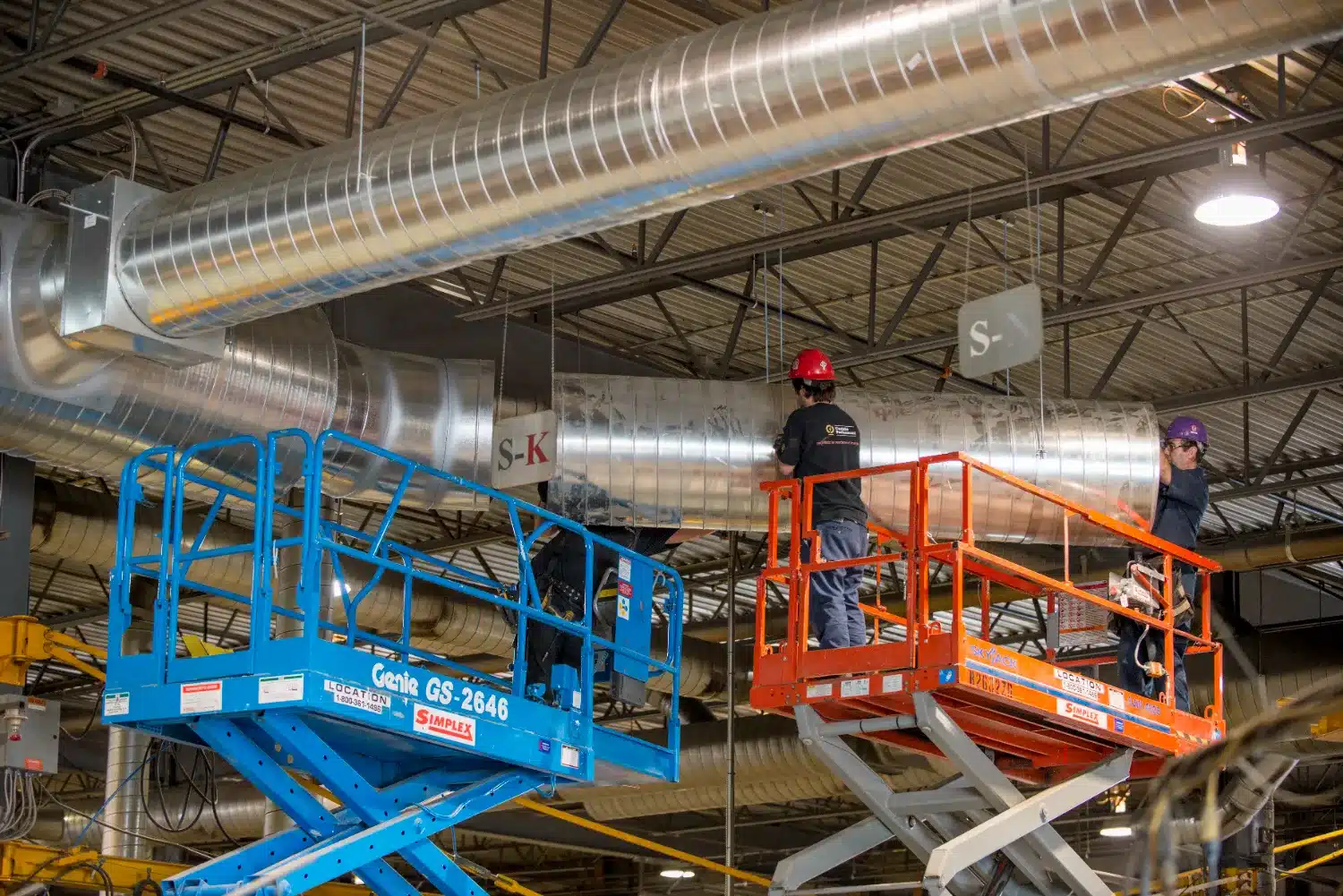
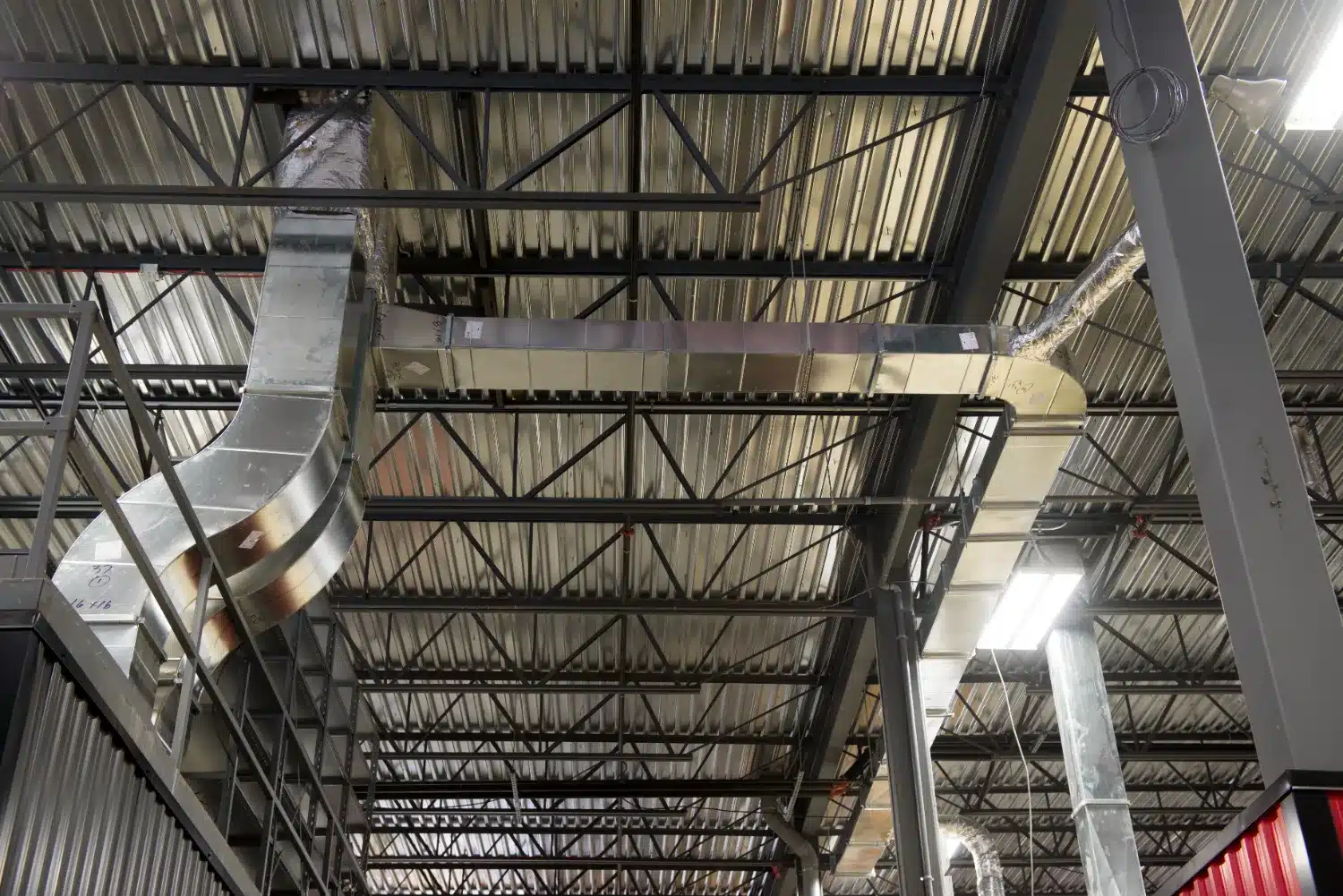
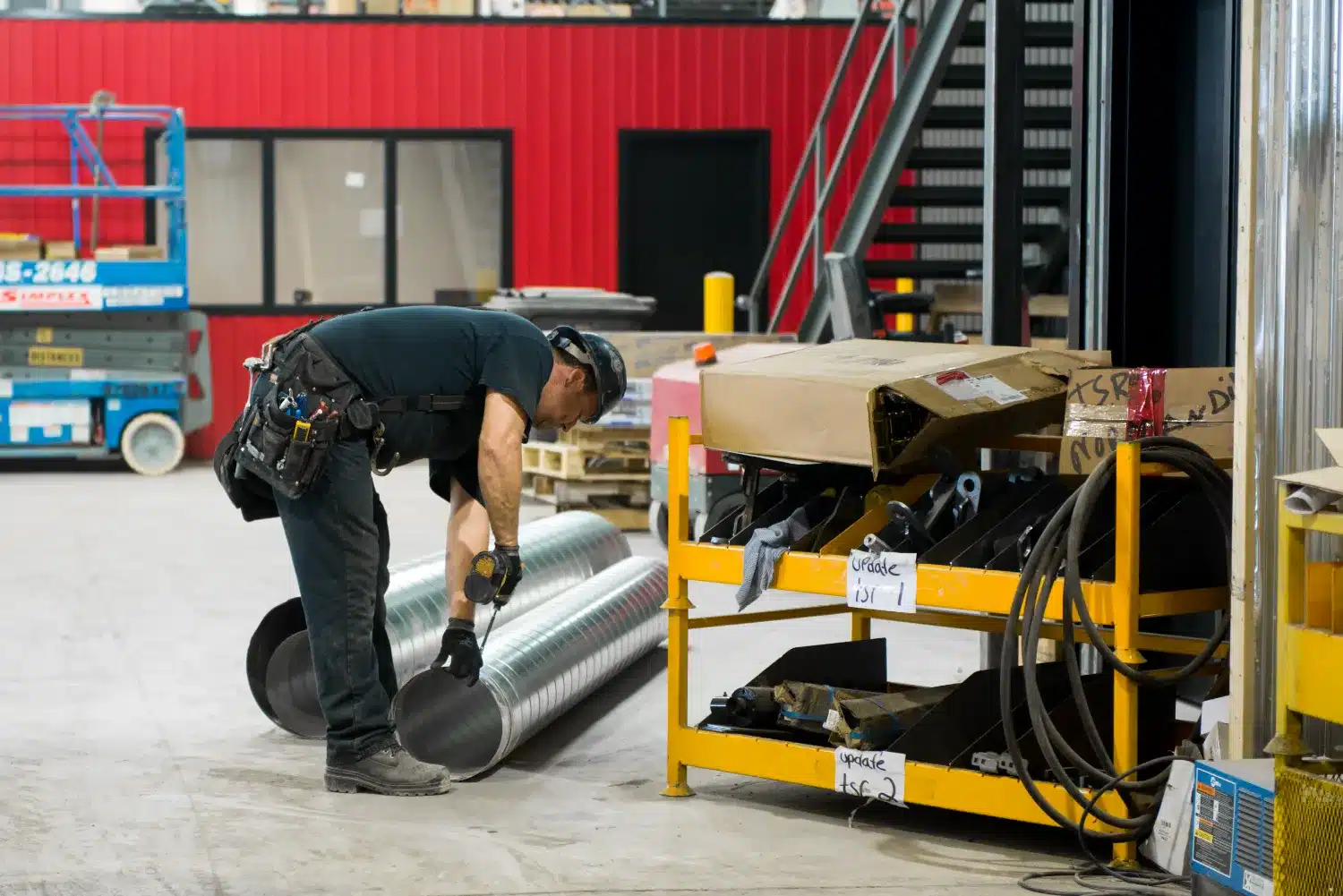
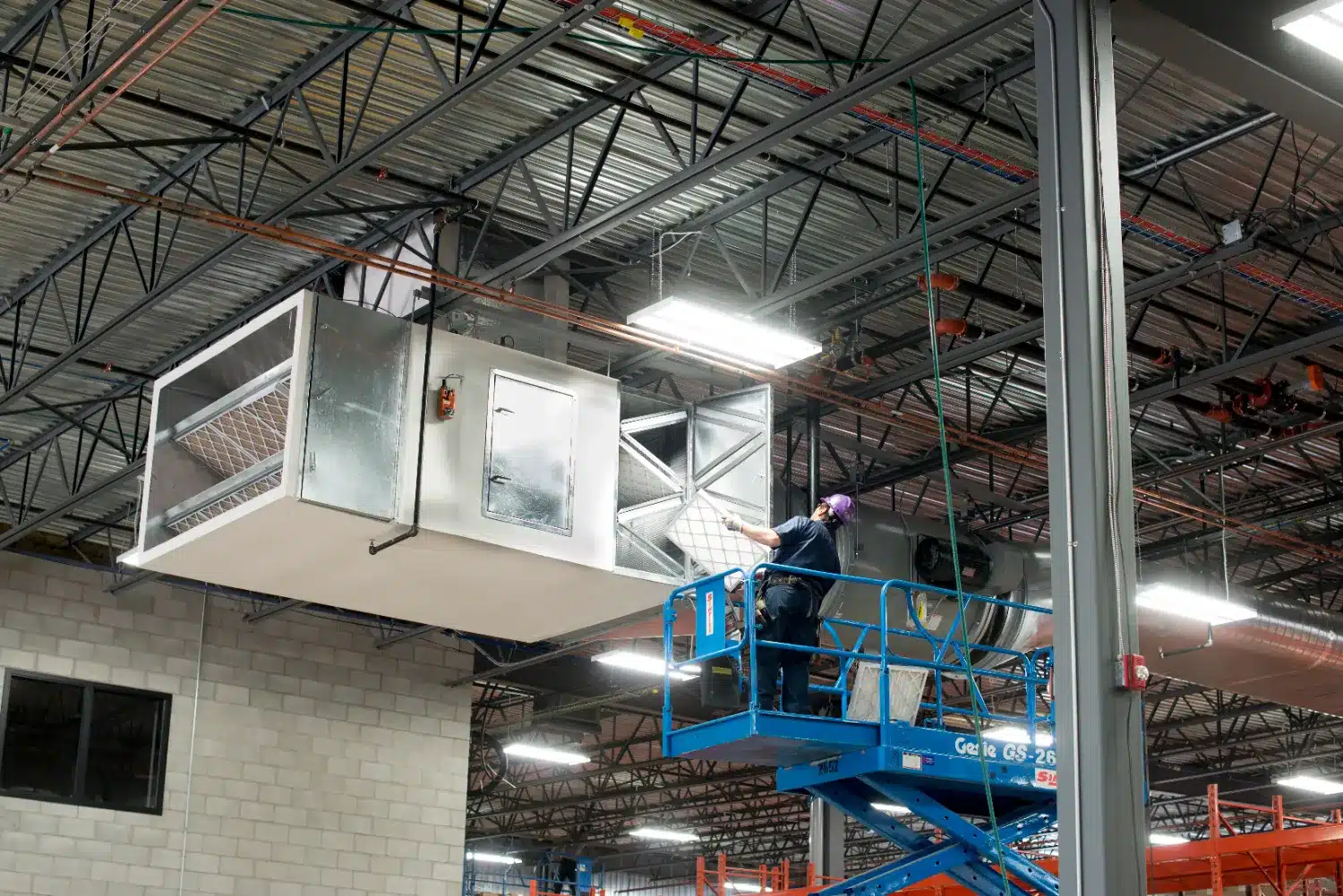
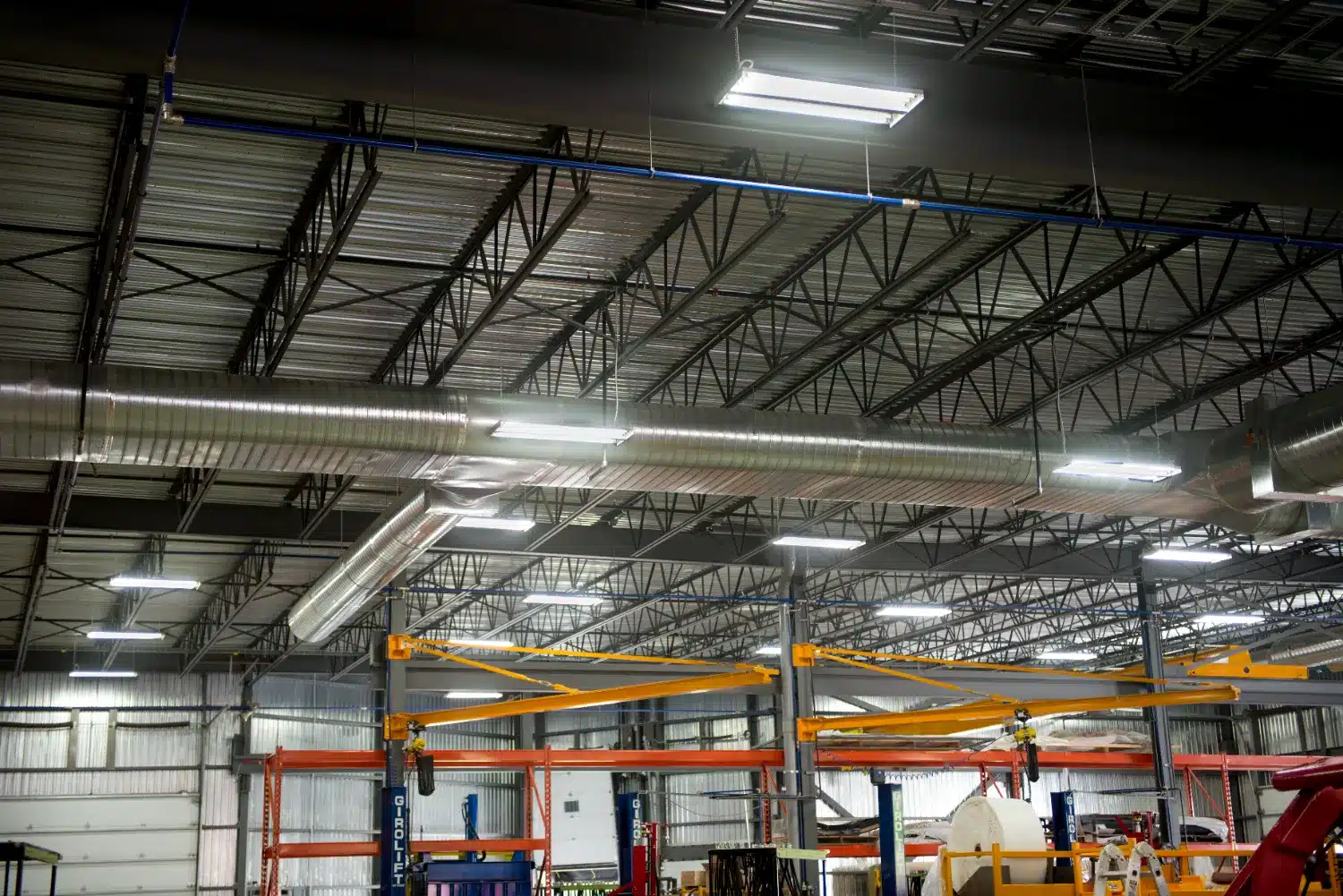
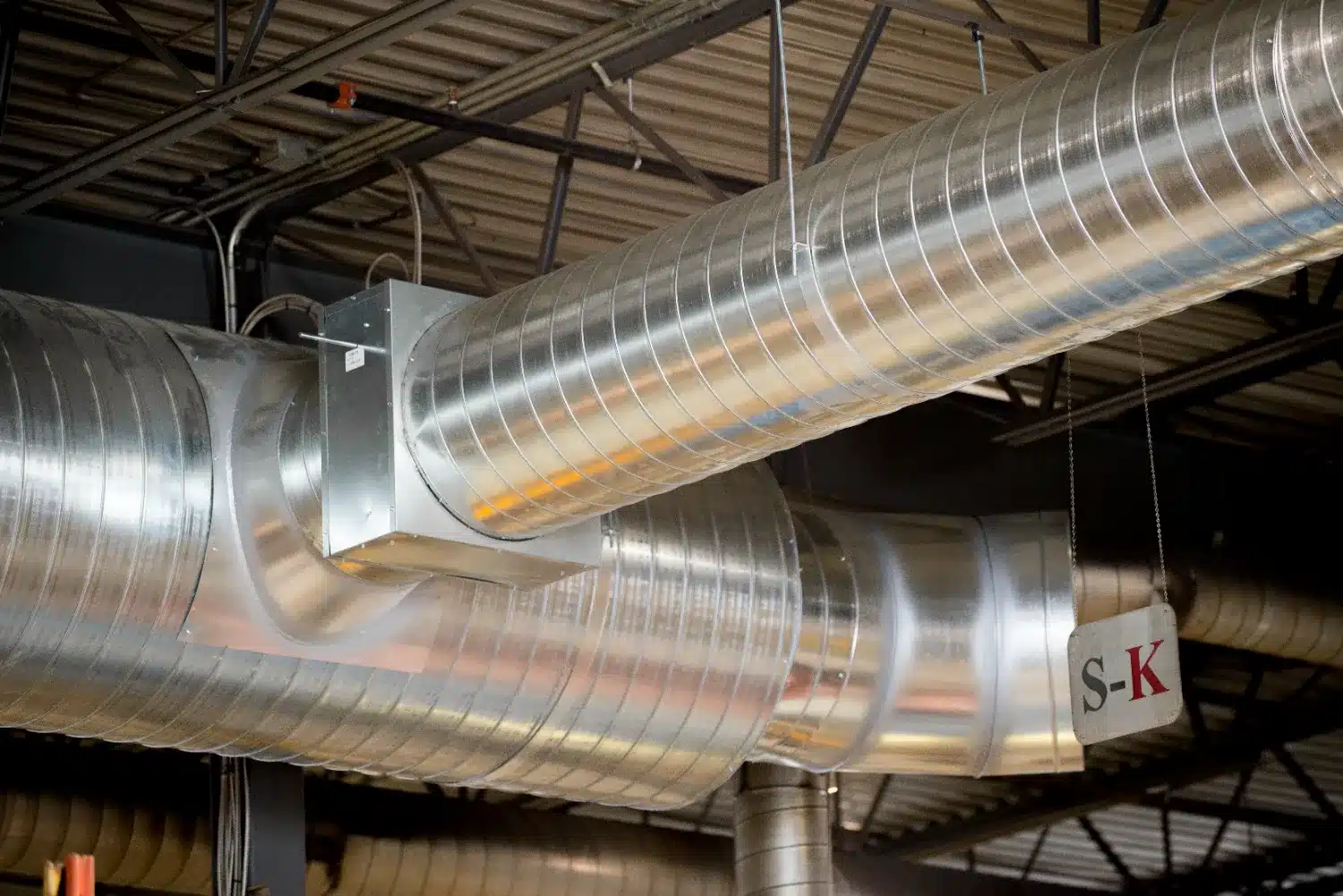
Our industrial and commercial ventilation solutions
- Ventilation and exhaust systems designed for demanding industrial environments
- Hygienic air treatment: advanced filtration, contaminant control, and humidity management
- Odour control and pollutant capture to ensure compliance and employee safety
- Heat recovery and energy optimization to reduce energy consumption
- Integration of MyPortal3E for smart monitoring and proactive air quality management
- 24/7 maintenance support to ensure reliability and operational continuity
Why choose Soteck Clauger for your ventilation needs?
- Recognized expertise with over 30 years of experience in industrial ventilation
- Support from a team of specialized engineers to design optimized solutions
- A comprehensive approach that integrates air treatment, energy management, and pollution control
- A commitment to performance and air quality in industrial settings
- Scalable solutions with smart monitoring to maximize long-term efficiency
The standards framework we work within
Air quality in agri-food plants is governed by private audit standards rather than by a single set of regulations. Our work is designed to stand up to an auditor, not just to function.
| Standard | What it requires for air |
|---|---|
|
HACCP |
Identification of airborne hazards by area, and documented monitoring of the associated preventive measures. |
|
BRC Global Standard for Food Safety |
Positive pressure in areas where high-risk products are handled, a documented maintenance program, and no cross-contamination through heat recovery units. |
|
FSSC 22000 |
Control of air quality in areas where unprotected products are exposed, and management of condensate as a potential source of contamination. |
|
ISO 14644 |
Particle cleanliness classification for cleanroom environments. |
|
Worker health and safety |
Quebec’s Regulation respecting occupational health and safety, for the capture of process fumes, dust, and vapours. |
Breathe easier, produce better with Soteck Clauger
In industrial air treatment, every plant has its own constraints: dust, fumes, process vapours, and ATEX zones. An effective treatment system starts with the actual sources of pollution. It then targets the occupational exposure limits that must be met. We combine industrial dust collection, the right filters, and activated carbon.
The goal: to capture fine particles and gaseous compounds at the source. The air change rate is calculated based on flow rates and pressure. Heating and air conditioning are integrated into the same system. Heat recovery then helps reduce energy costs. We do not treat industrial air piecemeal, but as a whole, from capture to discharge.
The result: a healthier environment and protected equipment. Our experts assess your situation and measure your dust and fumes. They then design a solution tailored to meet your objectives.
Tell us about your processes: we turn your air-related challenges into measurable performance gains through well-engineered industrial ventilation and air treatment.

Compliance and energy efficiency
Our airflow audits qualify your system against Canadian standards while identifying energy savings. One audit, two measurable benefits.
Frequently asked questions
How is hygienic air treatment ensured in agri-food plants?
By jointly controlling four variables: temperature, humidity, pressure between zones, and air cleanliness.
In practical terms, this means multi-stage filtration sized for each zone, a pressure cascade that protects sensitive areas, relative humidity control measured at multiple points, and equipment designed for washdown.
Addressing only one of these variables delivers surface-level compliance.
Read our complete guide to industrial air treatment
What is the difference between industrial ventilation and air treatment?
Ventilation moves air, while air treatment controls its properties. A ventilation system provides air exchange and exhaust. An air treatment system also controls temperature, humidity, pressure, and particulate and microbiological cleanliness.
In the agri-food industry, ventilation alone is never enough, because the air comes into contact with the product.
How often should plant air treatment filters be replaced?
In practice, quarterly or semi-annually, depending on site conditions. However, the best trigger is not the calendar; it is the differential pressure measured across the filter. In Quebec, and throughout most of Canada, particle levels vary significantly by season: pollen and humidity in the summer, fine combustion particles and very dry air in the winter. A fixed schedule therefore means replacing filters that are still good, or leaving clogged ones in service.
What is an airflow management audit?
This is a field survey that measures how air actually circulates within a plant, as opposed to what was specified in the plans. It documents humidity levels at multiple points per zone, pressure differentials between zones, the filtration classes in place, actual supply airflow rates, and the potential for heat recovery. It produces two deliverables: a compliance assessment and an energy assessment.
Read the full article on airflow management audits and their practical aspects
Why does a production room need to be under positive pressure?
Because air always flows from the area of highest pressure to the area of lowest pressure. A production room maintained at positive pressure relative to adjacent areas pushes air out of the sensitive area, rather than drawing air in from hallways, loading docks, and wash areas. Food safety audit standards require this for areas where high-risk products are handled.
What relative humidity level should be maintained in a food production area?
It depends entirely on the area. The relative humidity in an ambient-temperature production area is generally between 50% and 65%, in a dry packaging area between 40% and 55%, and in a cold processing area much higher. The rule that never changes: when relative humidity exceeds 70%, the risk of fungal growth increases significantly. And measurements must come from a sensor network, never from a single point.
When is a stainless steel air treatment unit really necessary?
Whenever the equipment is located in a frequently washed-down area or handles air that comes into contact with the product. A standard casing corrodes when exposed to alkaline detergents and acidic disinfectants, and its internal corners trap water. An AISI 304 or 316L stainless steel casing, with no dead spaces and with front access, can be cleaned and inspected without disassembly. Elsewhere in the plant, this is an unnecessary expense.
Read the article about our Climinox products
Is heat recovery cost-effective for industrial ventilation in Quebec?
Yes, especially since winters are long: every cubic metre of fresh air brought in must be heated, and every cubic metre of exhaust air carries away energy that has already been paid for. The challenge in the agri-food industry is not cost-effectiveness; it is the choice of heat recovery unit: it must prevent any transfer of contamination between the exhaust air and the supply air. Actual cost-effectiveness is calculated from measured airflow rates, not from a theoretical ratio.
How can process odours and volatile organic compounds (VOCs) be reduced?
First, through source capture, which is always more efficient and uses less energy than general ventilation. Second, through technology tailored to the specific compound: air scrubbers for soluble gases, and activated carbon for low-concentration volatile organic compounds and batch operations. The most common mistake is installing a system that does not address the true nature of the contaminant.
What standards govern air quality in a Quebec agri-food plant?
There is no single regulation governing air quality, but rather a set of overlapping audit standards. HACCP requires the identification of airborne hazards. BRC mandates positive pressure in high-risk areas and a documented maintenance program. SQF and FSSC 22000 mandate the documentation and management of condensate. ISO 14644 applies to cleanroom environments. For workers, Quebec’s Regulation respecting occupational health and safety applies.
Article written in collaboration with our expert:

Pierre-André Poirier Guay, Eng., Director, Engineering and Innovation at Soteck Clauger since 2006. With over 20 years of experience in building mechanical systems and industrial processes, he transforms complex requirements into high-performance, durable, and practical solutions.