
Industrial ventilation and hygienic air treatment
In a factory, air is not a support service.
It is an ingredient. It comes into contact with the product, flows through the production areas, carries moisture and contaminants, and takes a heavy toll on the energy bill. We have been designing, installing, and optimizing hygienic air treatment systems for the food and manufacturing industries in Quebec and Eastern Canada since 1993.

Experience Efficiency
Air quality is essential to employee health and equipment performance. Every production environment has its own unique challenges. That is why we design custom ventilation systems.
CAPTURE AT THE SOURCE, TREAT THE AIR FROM START TO FINISH
Industrial ventilation and air treatment are critical to the health of your workforce, the quality of your products, and the performance of your processes. In a workshop, the air quickly becomes laden with dust, fumes, vapors, and fine particles generated at workstations. These sources of pollution eventually exceed exposure limits and cause your equipment to become clogged.
We therefore approach air treatment as a comprehensive system, designed starting at the source. The capture system traps dust and fumes as soon as they are emitted. Industrial dust removal systems and filters treat solid particles. Activated carbon captures gaseous compounds and odors. A properly sized treatment system combines these steps based on the actual characteristics of the industrial air to be purified.
Air renewal ensures an adequate supply of fresh air and controlled exhaust. It maintains stable pressure and consistent air quality in every zone. Heating and air conditioning are integrated into the same system to maintain the desired operating temperature without wasting energy. Heat recovery recovers energy from the exhaust air and lowers energy costs without compromising airflow.
Certain processes create explosive atmospheres: ATEX zones require equipment and connections that are appropriate for the risk. The system is therefore designed to protect both people and production.
From contaminant analysis to filter selection, every decision is based on a thorough understanding of your processes and constraints. It is this integrated approach—from capture to discharge—that sets true industrial ventilation with integrated air treatment apart.
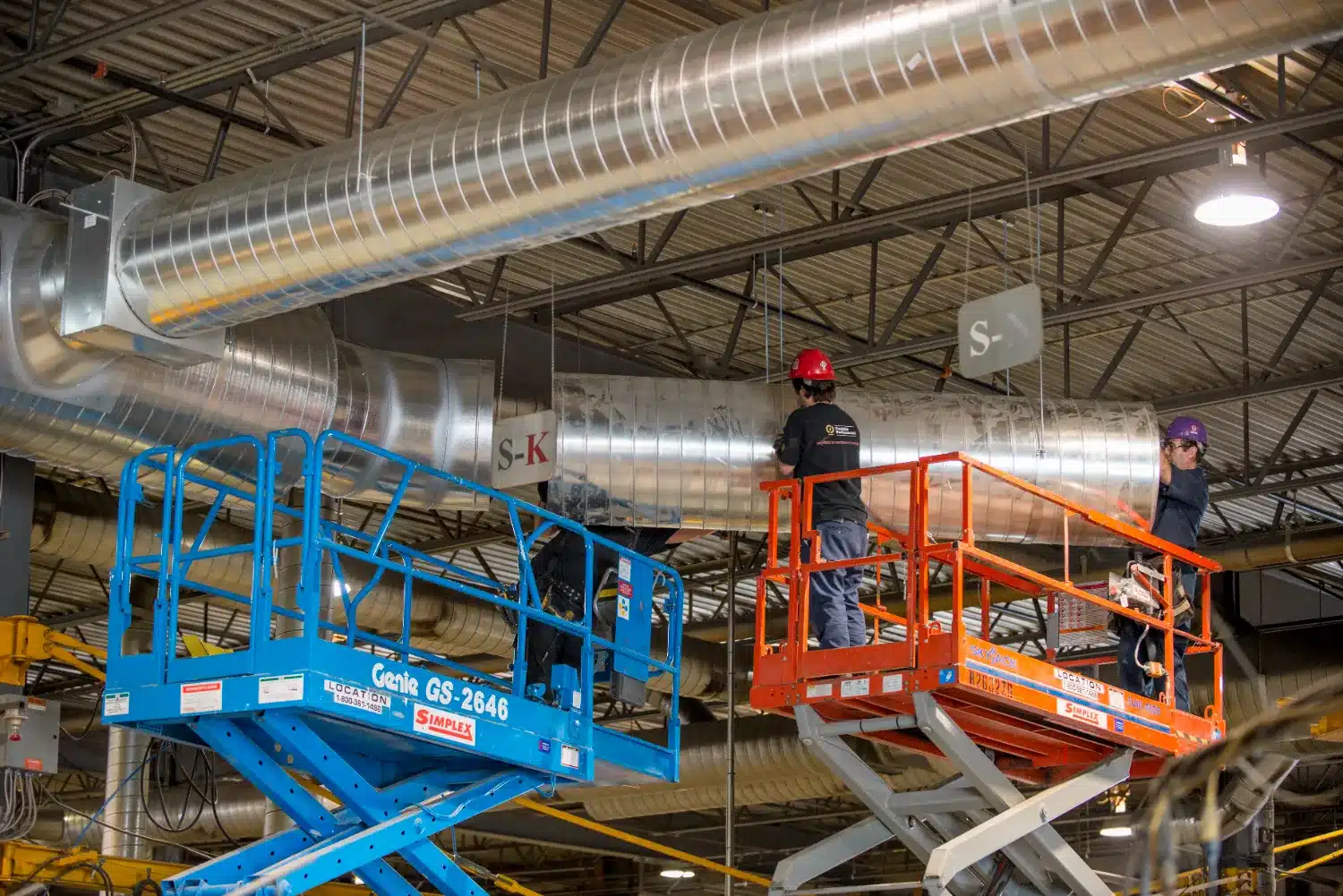
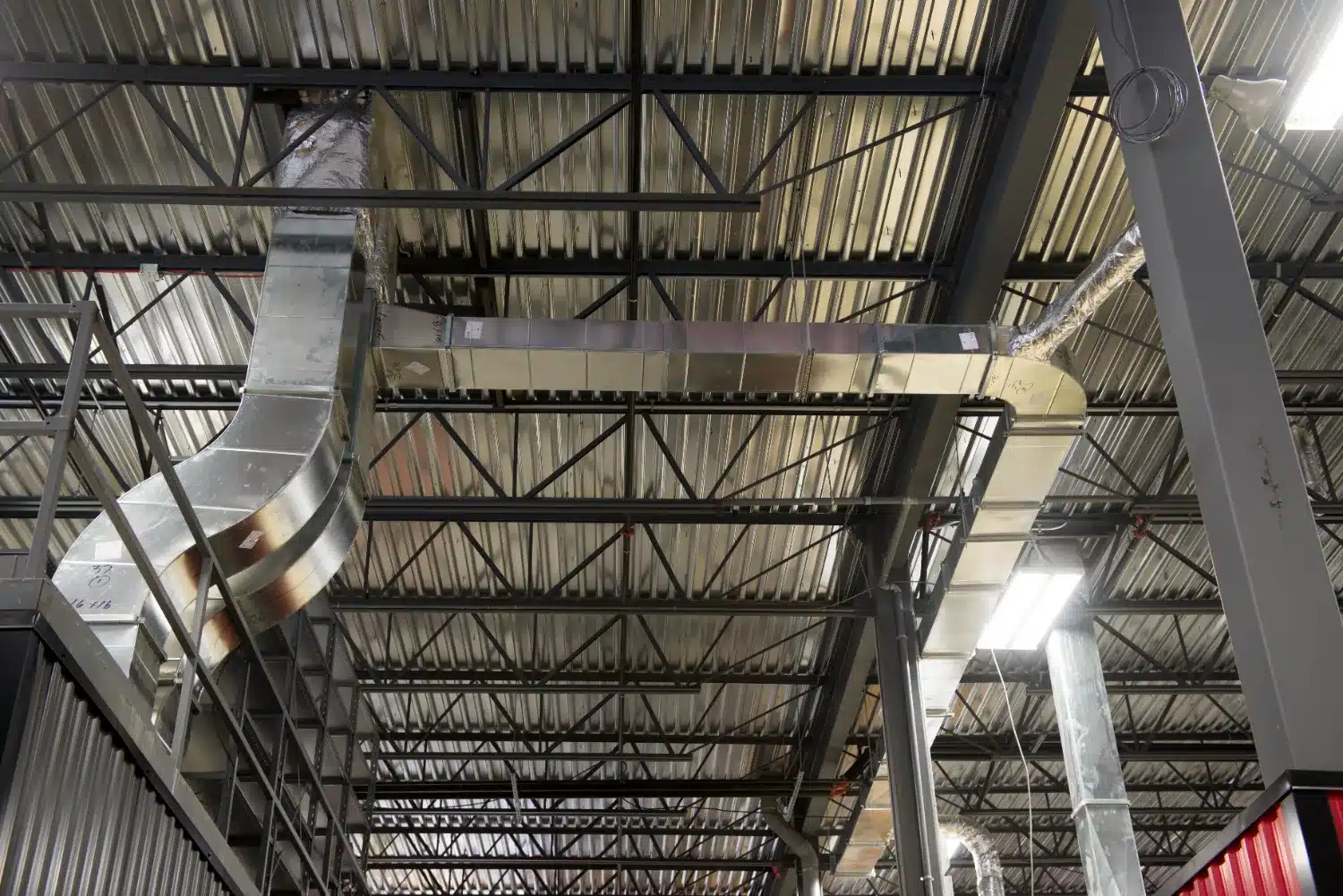
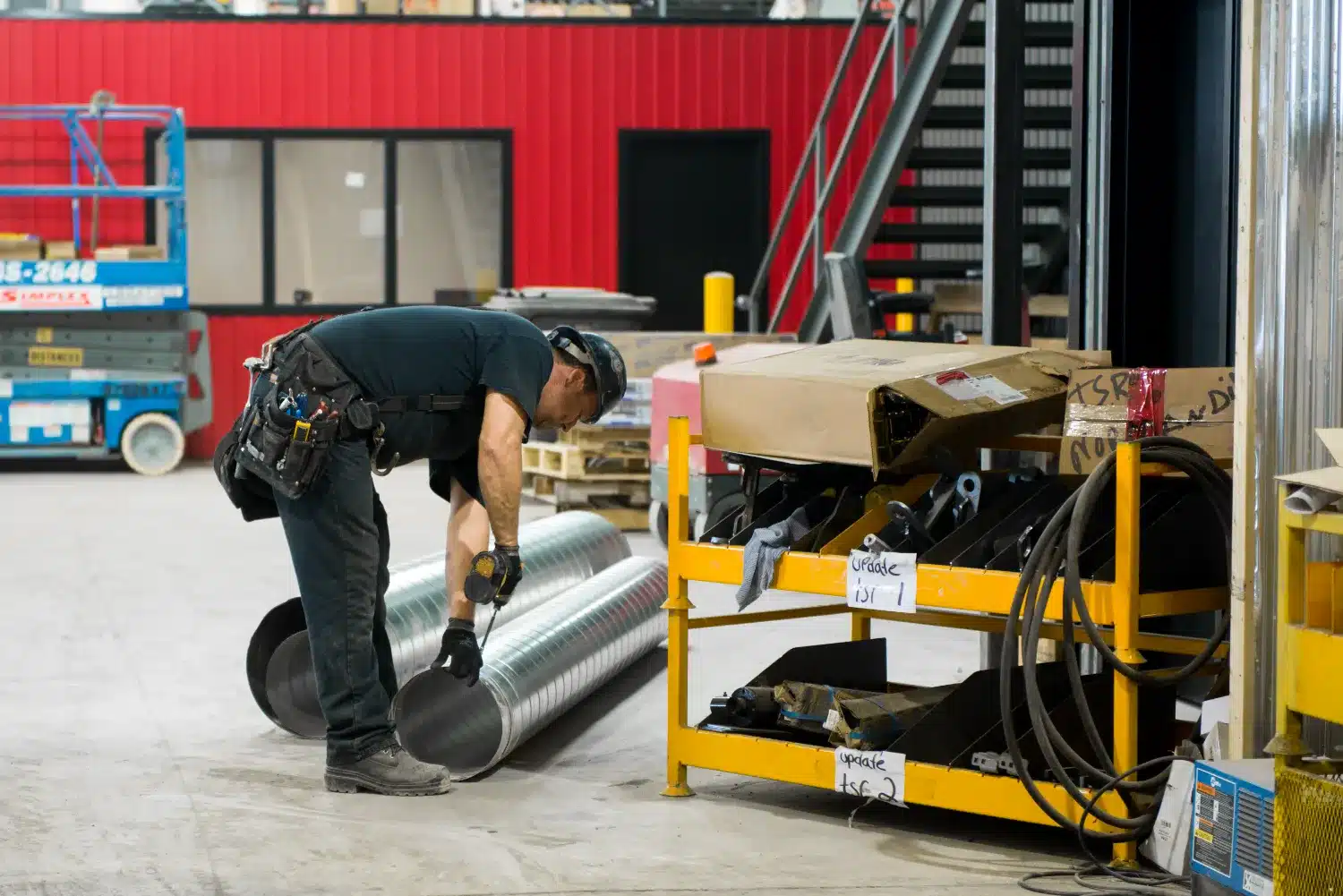
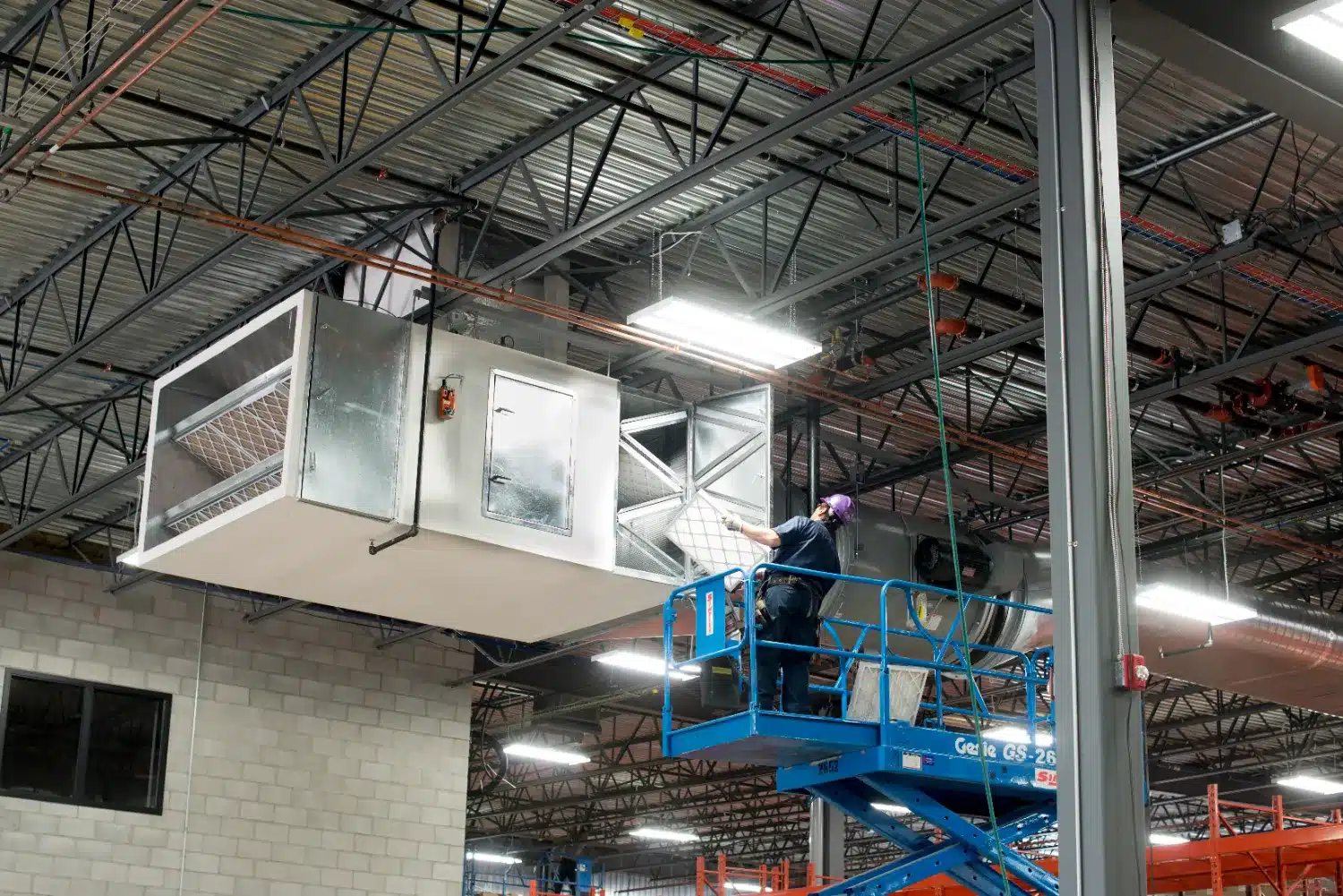
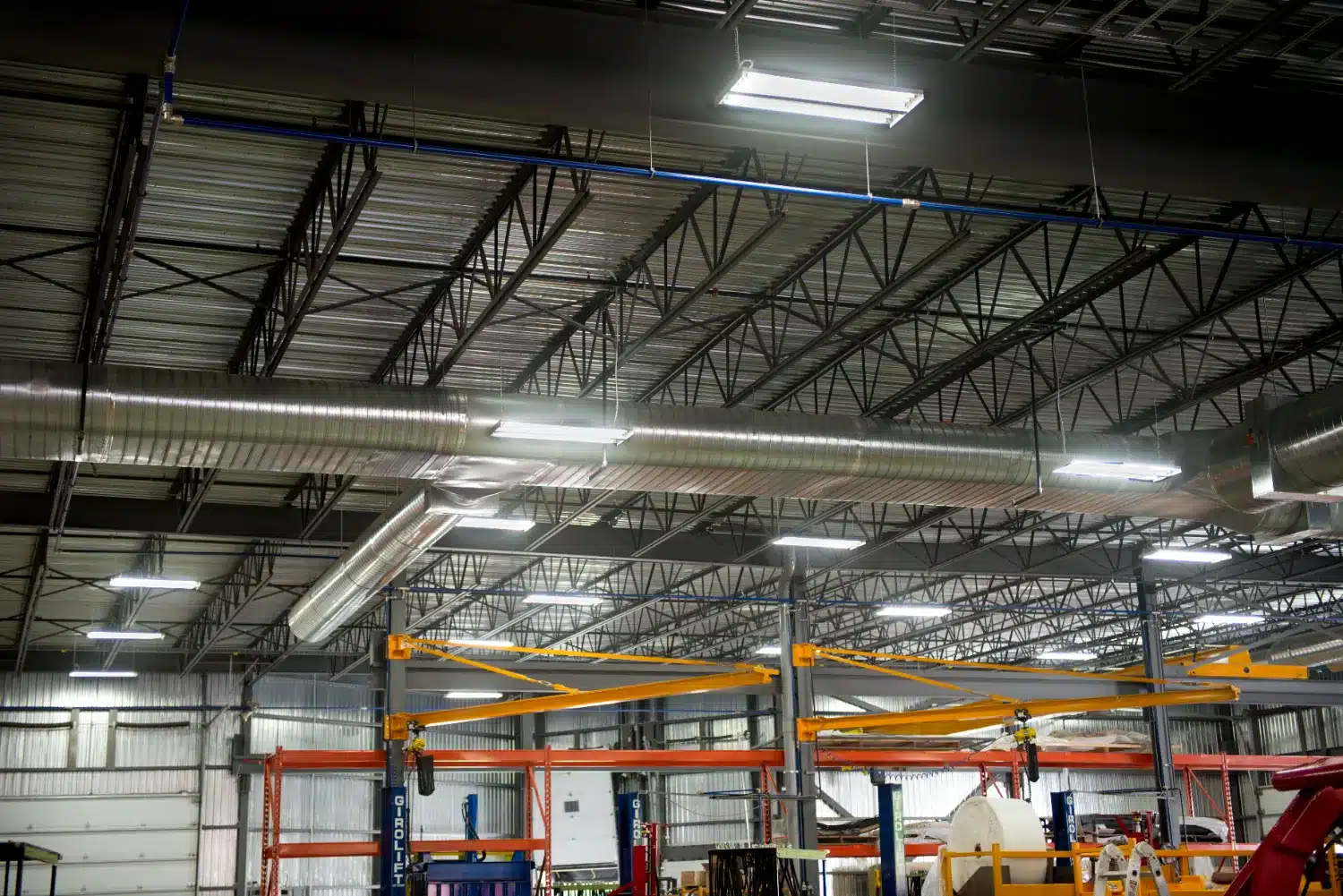
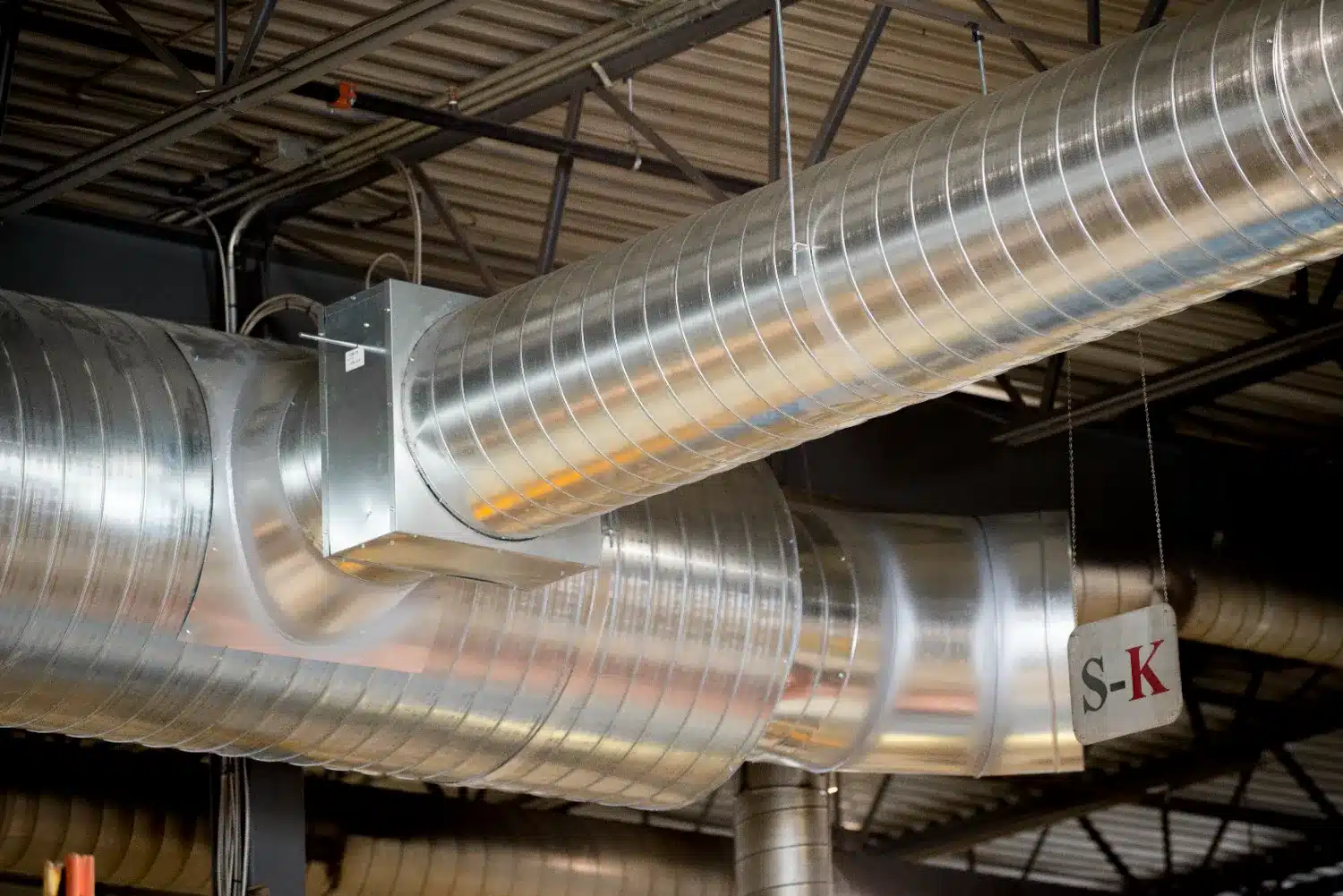
Our Industrial and Commercial Ventilation Solutions
- Ventilation and exhaust systems designed for demanding industrial environments
- Hygienic Air Treatment: Advanced Filtration, Contaminant Control, and Humidity Control
- Odor control and pollutant capture to ensure compliance and employee safety
- Heat Recovery and Energy Optimization to Reduce Energy Consumption
- Integration of MyPortal3E for Smart Monitoring and Proactive Air Quality Management
- 24/7 maintenance service to ensure reliability and operational continuity
Why Choose
Soteck-Clauger for Your Ventilation Needs
- Recognized expertise with over 30 years of experience in industrial ventilation
- Support from a team of specialized engineers to design optimized solutions
- A comprehensive approach that integrates air treatment, energy management, and pollution control
- A Commitment to Performance and Air Quality in Industrial Settings
- Scalable solutions with smart monitoring to maximize long-term efficiency
The regulatory framework withinwhich we operate
Air quality in food processing plants is governed by private audit standards rather than by a single set of regulations. Our interventions are designed to be defensible before the auditor, not merely functional.
| Reference Framework | What it requires in terms of air |
|---|---|
|
HACCP |
Identification of airborne hazards by area, and documented monitoring of the associated preventive measures. |
|
BRC Global Standard for Food Safety |
Positive pressure in areas where high-risk products are handled, a documented maintenance program, and no transfer of contamination to heat recovery units. |
|
FSSC 22000 |
Ensuring air quality in areas where unprotected products are exposed, and managing condensate as a potential source of contamination. |
|
ISO 14644 |
Particle Cleanliness Classification for Cleanroom Environments. |
|
From the workers’ perspective |
Occupational Health and Safety Regulations for the Capture of Process Fumes, Dust, and Vapors. |
Breathe easier, produce more with Soteck Clauger
In industrial air treatment, every workshop has its own challenges: dust, fumes, process vapors, and ATEX zones. An effective treatment system starts by addressing the actual sources of pollution. It then works to ensure compliance with exposure limit values. We combine industrial dust removal, specialized filters, and activated carbon.
The goal: to capture fine particles and gaseous compounds at the source. The air change rate is calculated based on flow rates and pressure. Heating and air conditioning are integrated into the same system. Heat recovery then helps reduce energy costs. Industrial air is not treated in isolated parts, but as a whole, from intake to exhaust.
The result: a healthier environment and protected equipment. Our experts assess your situation and measure your dust and fumes. They then design a solution tailored to meet your objectives.
Tell us about your processes: we turn your air-related challenges into measurable performance gains through industrial ventilation and controlled air treatment.

Compliance + Energy Efficiency:
Our airflow audits certify your system in accordance with Canadian standards while identifying energy savings. One audit, two measurable benefits.
Frequently Asked Questions
1. How is hygienic air treatment ensured in the food industry?
By jointly controlling four variables: temperature, humidity, pressure between zones, and air cleanliness.
In practical terms, this means a multi-stage filtration system tailored to each zone, a pressure cascade that protects sensitive areas, relative humidity control measured at multiple points, and equipment designed to be washable.
Addressing just one of these variables results in only superficial compliance.
Check out our comprehensive guide to air treatment
2. What is the difference between industrial ventilation and air treatment?
Ventilation moves air, while air treatment controls its properties. A ventilation system provides air exchange and exhaust. An air treatment system also controls temperature, humidity, pressure, and particulate and microbiological cleanliness.
In the food industry, ventilation alone is never enough, because the air comes into contact with the product.
3. How often should the filters in a factory's air-handling system be replaced?
In practice, this is done quarterly or semiannually, depending on the site’s specific circumstances. However, the best trigger is not the calendar; it is the differential pressure measured across the filter. In Quebec, and throughout most of Canada, particle levels vary significantly by season: pollen and humidity in the summer, fine combustion particles and very dry air in the winter. A fixed schedule therefore results in filters being replaced even when they’re still in good condition or just starting to become clogged.
4. What is an airflow management audit?
This is a field survey that measures how air actually circulates within a factory, as opposed to what was specified in the plans. It documents humidity levels at multiple points per zone, pressure differentials between zones, the filtration classes in place, actual airflow rates, and the potential for heat recovery. It produces two deliverables: a compliance assessment and an energy assessment.
Read the full article on GFAs and practical considerations
5. Why does a production room need to be under positive pressure?
Because air always flows from the area of highest pressure to the area of lowest pressure. A production room maintained at positive pressure relative to adjacent areas pushes air out of the sensitive area, rather than drawing air in from hallways, loading docks, and wash areas. Food safety audit standards require this for areas where high-risk products are handled.
6. What relative humidity level should be maintained in a food production area?
It depends entirely on the area. The relative humidity in a production area is generally between 50 and 65 percent, in a dry packaging area between 40 and 55 percent, and in a cold processing area much higher. The rule that never changes: when relative humidity exceeds 70%, the risk of fungal growth increases significantly. And measurements must be taken across the entire facility, never at a single point.
7. Is a stainless-steel air conditioner really necessary?
This is the case whenever the equipment is located in an area that is frequently washed or comes into contact with the air that touches the product. A standard enclosure corrodes when exposed to alkaline detergents and acidic disinfectants, and its internal corners trap water. A cabinet made of AISI 304 or 316L stainless steel, with no blind spots and front access, can be cleaned and inspected without disassembly. Elsewhere in the plant, this is an unnecessary expense.
Read the article about our Climinox products
8. Is heat recovery cost-effective for industrial ventilation in Quebec?
This is all the more true given that winters are long: every cubic meter of fresh air brought in must be heated, and every cubic meter of exhaust air carries away energy that has already been paid for. The challenge in the food processing industry is not profitability; it is the choice of heat recovery unit: it must prevent any transfer of contamination between the exhaust air and the supply air. Actual profitability is calculated based on actual airflow measurements, not a theoretical ratio.
9. How can odors and volatile organic compounds be reduced in a process?
First, through source capture, which is always more efficient and uses less energy than general ventilation. Second, through technology tailored to the specific compound: air scrubbers for soluble gases, activated carbon for low-concentration volatile organic compounds, and batch operations. The most common mistake is installing a system that does not address the true nature of the contaminant.
10. What standards govern air quality in a food processing plant in Quebec?
There is no single regulation governing air quality, but rather a set of overlapping audit standards. HACCP requires the identification of airborne hazards. BRC mandates positive pressure in high-risk areas and a documented maintenance program. SQF and FSSC 22000 mandate the documentation and management of condensate. ISO 14644 applies to cleanroom environments. For workers, the Occupational Health and Safety Regulations apply.
Article written in collaboration with our expert:

Pierre-André Poirier Guay, Eng., Director of Engineering & Innovation at Soteck Clauger since 2006. With over 20 years of experience in building mechanics and industrial processes, he transforms complex requirements into high-performance, sustainable, and practical solutions.