
Post-harvest storage of fruits and vegetables: minimize your losses
Perfect air to keep your produce fresh

Our expertise in freshness
Fruits and vegetables are essential to healthy nutrition. At Soteck Clauger, our expertise in refrigeration and air treatment guarantees their quality from field to plate. Our unique approach combines cutting-edge technologies with the understanding of each product’s specific needs. We create perfectly calibrated environments preserving their nutritional and taste qualities, maximizing their commercial value throughout the supply chain.
Preserve the natural quality ofyour products
We promote the consumption of natural, less processed and additive-free foods. The post-harvest challenge: prolonging the shelf life of fruit and vegetables without altering their properties.
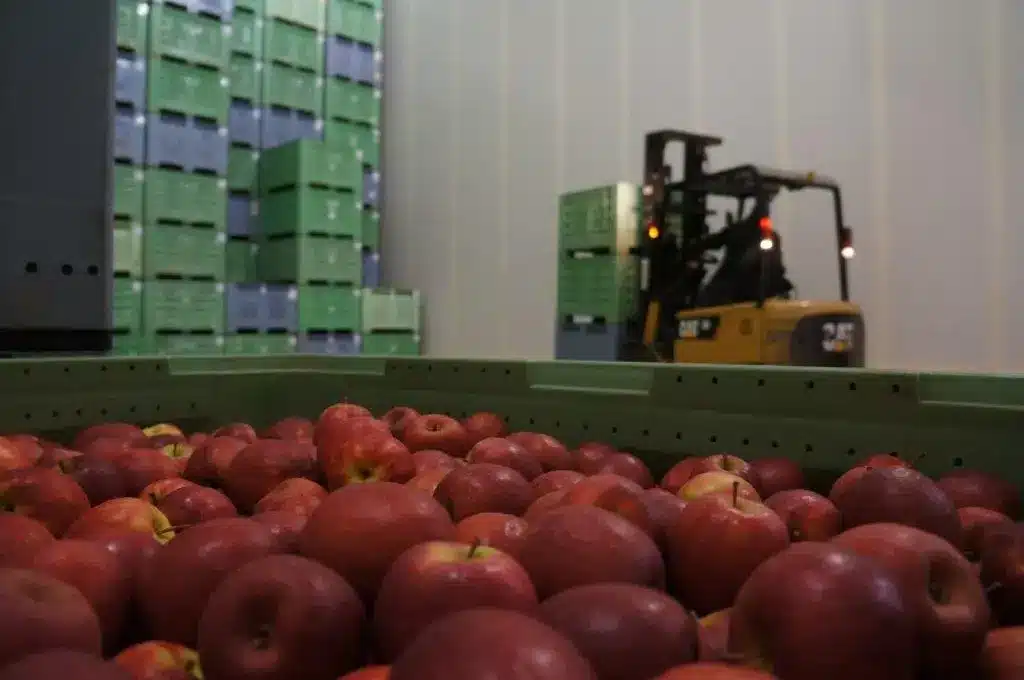
Post-harvest storage of fruits and vegetables begins with pre-cooling tailored to the specific crop. Our solutions ensure humidity control in cold storage and post-harvest storage of vegetables. We also design refrigeration systems for potatoes, tailored to volume, variety, and storage objectives.
Our solution? Control every environmental parameter with surgical precision. This philosophy respects the integrity of the product while optimizing its shelf life, meeting consumer expectations for healthy, authentic products while reducing food waste.
Solutions for every stage of preservation
Our know-how offers tailor-made solutions for every phase:
- Seed and seedling storage: optimal preservation conditions;
- Rapid cooling/drying: loss reduction, nutritional preservation;
- Long-term storage: atmosphere, humidity and energy management;
- Ripening/degreening: controlled uniform maturation;
- Processing: blast freezing (IQF, block, plate), dehydration, cutting.
Each solution maximizes the value of your crops.



Complete, integrated technical control
Our solutions integrate the management of essential parameters: temperature, humidity, atmosphere and anti-sprouting treatments.
Our turnkey offer includes advanced control systems, refrigeration and air treatment for optimum preservation. This total integration ensures perfect synergy between all equipment, eliminating areas of weakness.
The result: fewer losses and consistent quality that builds customer loyalty and strengthens your reputation.
Comprehensive support through to finished products
Our expertise goes beyond primary storage. We support manufacturers and producers in their secondary processing, guaranteeing optimal conditions for jams, compotes, sorbets, yogurts, juices, beverages and other processed products. This global vision enables us to optimize every stage, from raw material to finished product. With Soteck Clauger, your processes become more efficient and sustainable, creating value at every level.
Does your plant comply with CFIA and MAPAQ standards?
Our certified airflow management audits identify discrepancies before official inspections. Avoid fines and secure your operations.
FAQ: preserving freshness, minimizing waste and making the most of every harvest
Post-harvest storage requires precise control of temperature, humidity, and airflow. Check out these answers to better understand pre-cooling, cold storage, and air treatment solutions for fruit and vegetable growers, packers, and processors. We can assess your storage conditions in just one day: Flash Audit
Why is it important to quickly cool fruits and vegetables after harvest?
Produce continues to breathe and change after harvest. Pre-cooling lowers its temperature before storage or shipment.
Better temperature control helps preserve appearance, firmness, and freshness. However, the method chosen must take into account the specific sensitivity of each product.
The installation is sized for the volumes received, harvest schedules, and packaging formats. It must also maintain a consistent temperature despite frequent product deliveries.
What parameters need to be monitored in a post-harvest storage warehouse?
Temperature, relative humidity, and air circulation are fundamental parameters. Some products also require precise control of the gases present in the atmosphere.
Storage guidelines vary depending on the species, variety, maturity, and intended storage duration. They must also be adjusted based on the condition of the product upon arrival.
Regular monitoring helps detect discrepancies before they affect a significant portion of the inventory. The data collected also supports operational and maintenance decisions.
How do you keep vegetables from drying out in cold storage?
Drying out occurs when the air removes too much moisture from the surface of the vegetables. Excessive airflow or insufficient humidity can accelerate this process.
The airflow must cool effectively without directing strong jets of air at the products. The design of the ducts, evaporators, and storage areas directly affects the outcome.
Proper control maintains the conditions even when doors are opened and shipments arrive. It can also minimize temperature variations between areas near and far from the equipment.
Why is it important to control humidity when storing fruits and vegetables?
Moisture content affects weight loss, appearance, and texture. If the moisture content is too low, it increases moisture loss and reduces the marketable yield.
However, too high a level can cause condensation to form on surfaces. This condensation can make it difficult to maintain hygiene, package products, and keep conditions stable.
Proper storage depends on the product, its packaging, and the intended storage period. It must be maintained with ventilation appropriate for the product’s storage requirements.
What is the best solution for storing potatoes?
Potatoes require a storage strategy tailored to their final destination. Storage requirements vary depending on whether they are intended for the fresh market or for processing.
Ventilation, temperature, and humidity must be controlled throughout the entire storage period. The building’s volume and storage depth also influence the design.
Our site analysis determines the required capacity, air distribution, and control systems. It takes into account incoming shipments, storage duration, and external conditions.
How can we reduce losses during the storage of fruits and vegetables?
Losses can be caused by fluctuations in temperature, humidity, or airflow. They are often exacerbated by peak periods and repeated openings.
Control begins as soon as the product is received, with proper pre-cooling and good organization. Monitoring conditions then allows for a quick response when a deviation is detected.
Each solution is designed to suit the product, the building, and the operating model. It must also incorporate areas for handling, sorting, packaging, and shipping.
Can the heat generated by an agricultural refrigeration system be recovered?
Refrigeration systems release heat while the equipment is operating. This heat can sometimes be recovered for useful purposes on site.
It can be used to heat spaces, preheat water, or supply certain processes. Its use depends on the available temperatures and the time of year when the need arises.
Our energy study identifies the project’s potential uses and realistic benefits. It allows us to prioritize investments based on expected performance and the building’s constraints.
How do you prepare an installation for a health or regulatory inspection?
The operator must maintain clean, controlled, and documented storage conditions. Preventing condensation and maintaining equipment must be part of the procedures.
Equipment must support sanitation practices and facilitate cleaning operations. Temperature and humidity data can also help demonstrate control over environmental conditions.
Soteck Clauger can assess environmental conditions and recommend technical improvements. However, ultimate regulatory compliance remains the responsibility of the operator.
How much does a downgraded lot really cost you at the end of its storage period?
It all starts with the actual conditions observed in your building. We measure temperatures, relative humidity, and air velocities. We then compare these readings to the actual needs of your crops. The Flash Audit completes this process in a single day, with no obligation.
Pre-cooling fruits and vegetables is the key factor. A product brought in while still warm retains its heat for days. Frequent product deliveries raise the ambient temperature. Post-harvest refrigeration capacity is sized to accommodate peak intake volumes, not average volumes.
Controlling humidity in cold storage helps preserve marketable weight. Air that is too dry causes the surface of vegetables to dry out. Air that is too humid causes condensation to form on the packaging. The proper setting depends on the product and the intended storage duration.
Humidity control in warehouses also depends on airflow distribution. Air flowing too quickly dries out the pallets in the front row. Fabric ducts distribute the airflow without directing it at the products. The difference in humidity between nearby and distant areas is monitored.
Refrigeration for potatoes follows a different approach. Whether for the fresh market or processing, the requirements change. Storage depth and building volume are equally important. Our Agro-CTA systems are installed in root vegetable warehouses in Quebec.
Post-harvest storage of vegetables is monitored using data. Agro-track measures weight, temperature, humidity, and CO₂. An anomaly detected early costs less than a rejected batch. The same data is used to demonstrate compliance with the CFIA.
Vegetable cold storage in Quebec must withstand both winter and heat waves. The building envelope and temperature control systems are put to the test under these extreme conditions. Have our experts evaluate your fruit and vegetable storage conditions. They will quantify the savings and then commit to the results with a written performance guarantee.