
Industrial Refrigeration
Industrial refrigeration safeguards your products, processes, and profit margins. Natural refrigerants (NH₃ and CO₂), heat recovery, and 24/7 maintenance: environmentally friendly systems designed for optimal performance in your industrial applications.

EFFICIENT AND LONG-LASTING REFRIGERATION SYSTEMS
Facing growing energy challenges, SMEs deserve better than off-the-shelf solutions. We understand your budget represents a major investment, not just another project.
Our approach? Intelligent refrigeration systems designed for your reality. We transform your constraints into efficiency opportunities, with fast service and a team that knows your plant inside out.
We master cold, summer and winter!
Custom design, installation, and optimization ensuring performance and environmental compliance. Our field teams are backed by our engineering services and highly qualified project managers, ensuring precise planning and flawless execution. Turnkey solution including engineering, installation, maintenance, and 24/7 technical support for your complete peace of mind.

Our industrial refrigeration solutions
- Energy-efficient refrigeration systems, optimized to reduce power consumption
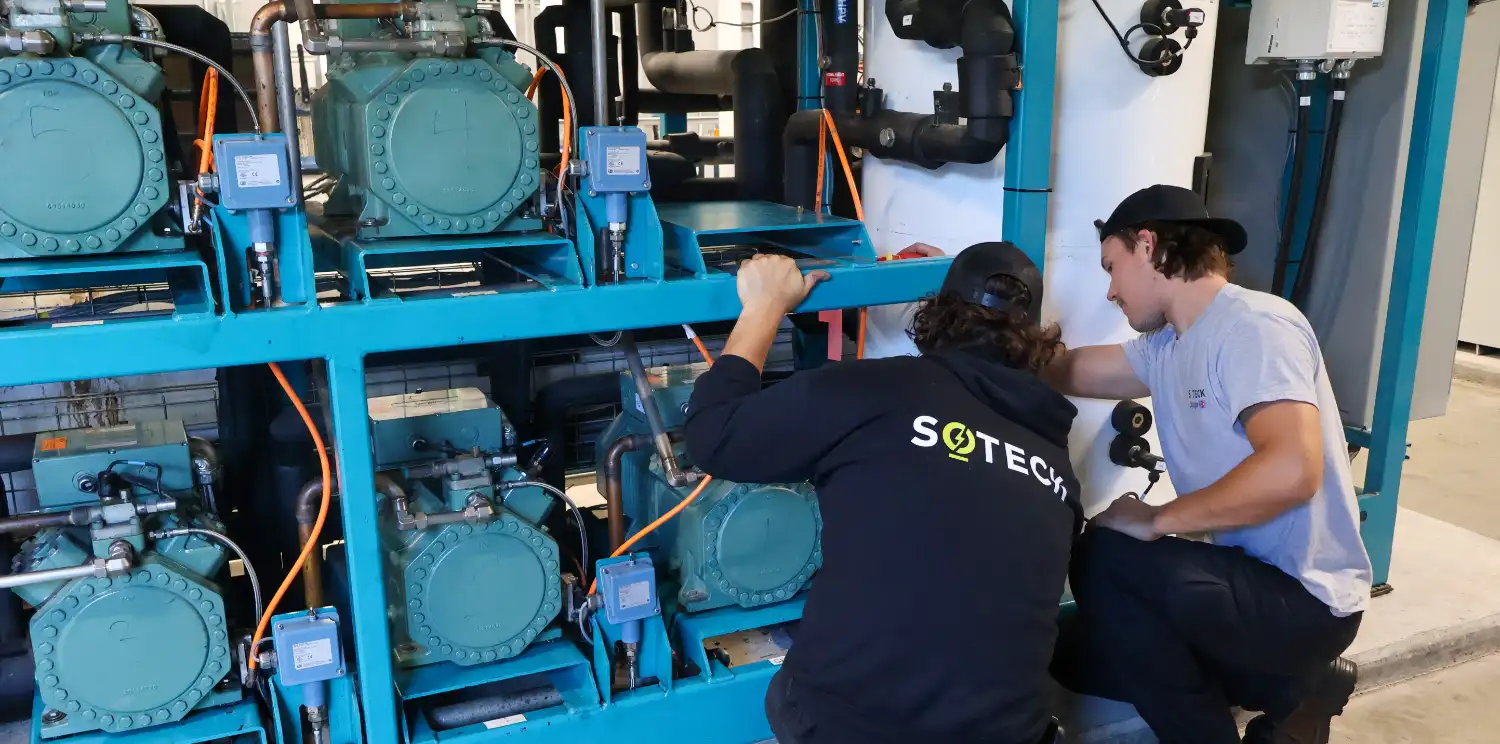
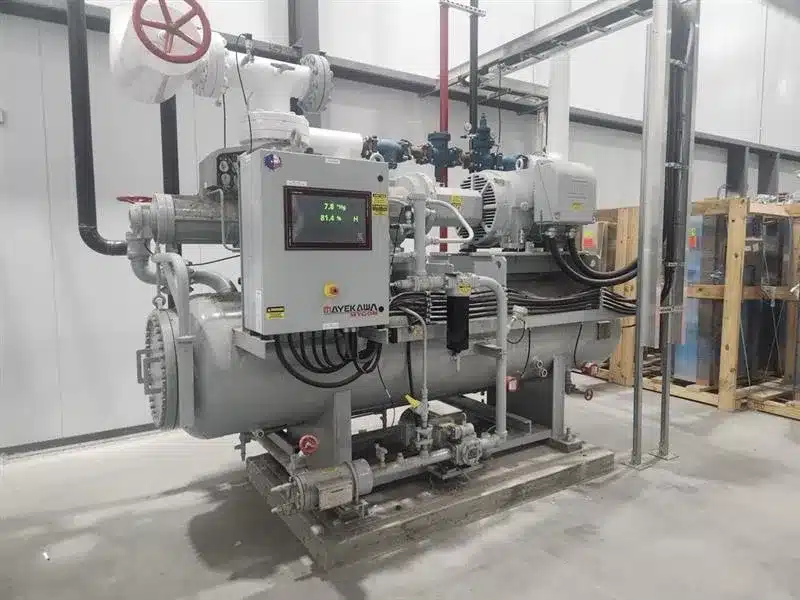
- Installation and maintenance of refrigeration circuits NH₃, CO₂, propane and other natural fluids
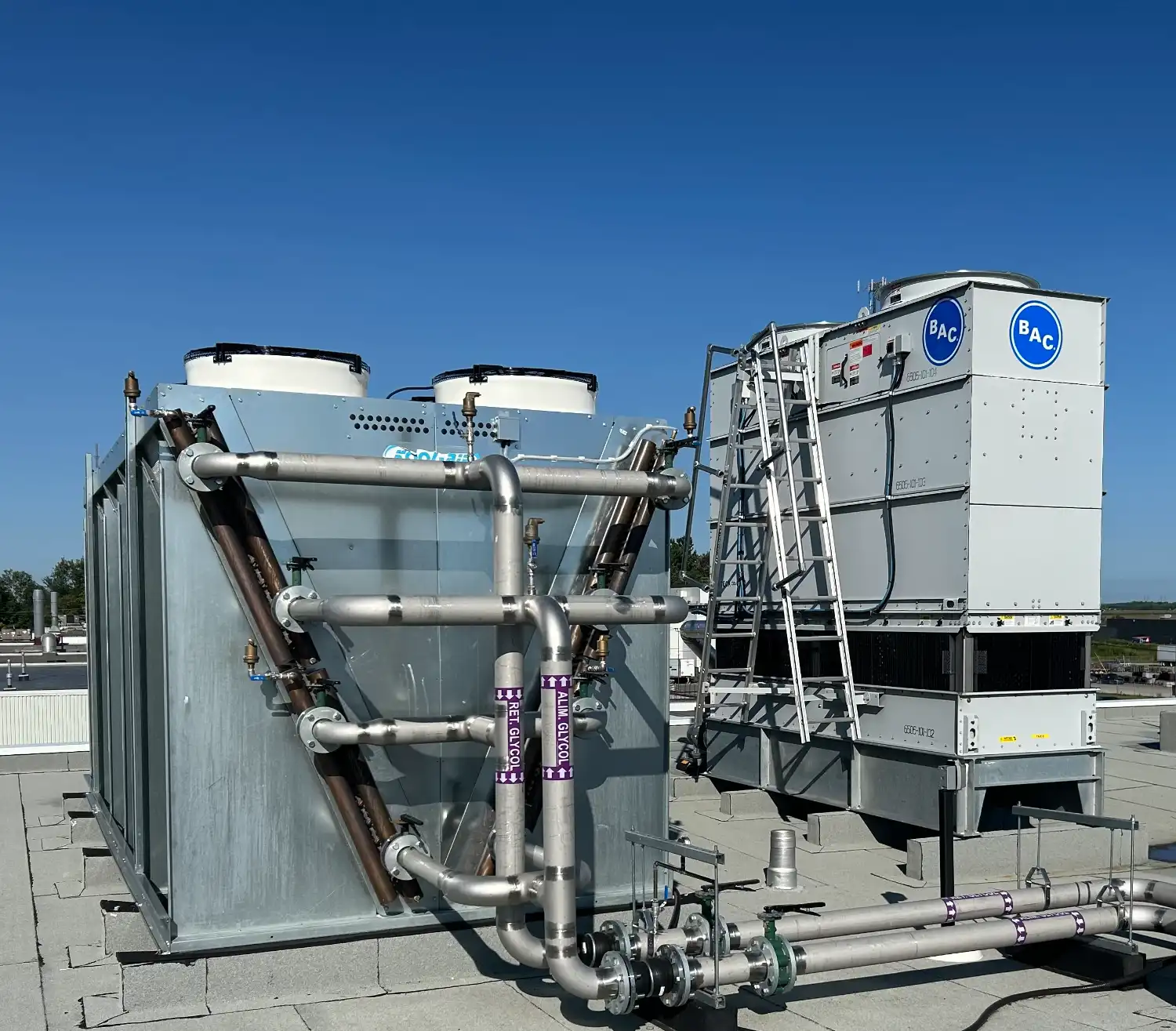
- Heat recovery technologies to recover waste energy and reduce operating costs
- Advanced control systems and plant automation for optimized cold management
- Rapid cooling and deep-freezing solutions tailored to the specific needs of the food and manufacturing industries
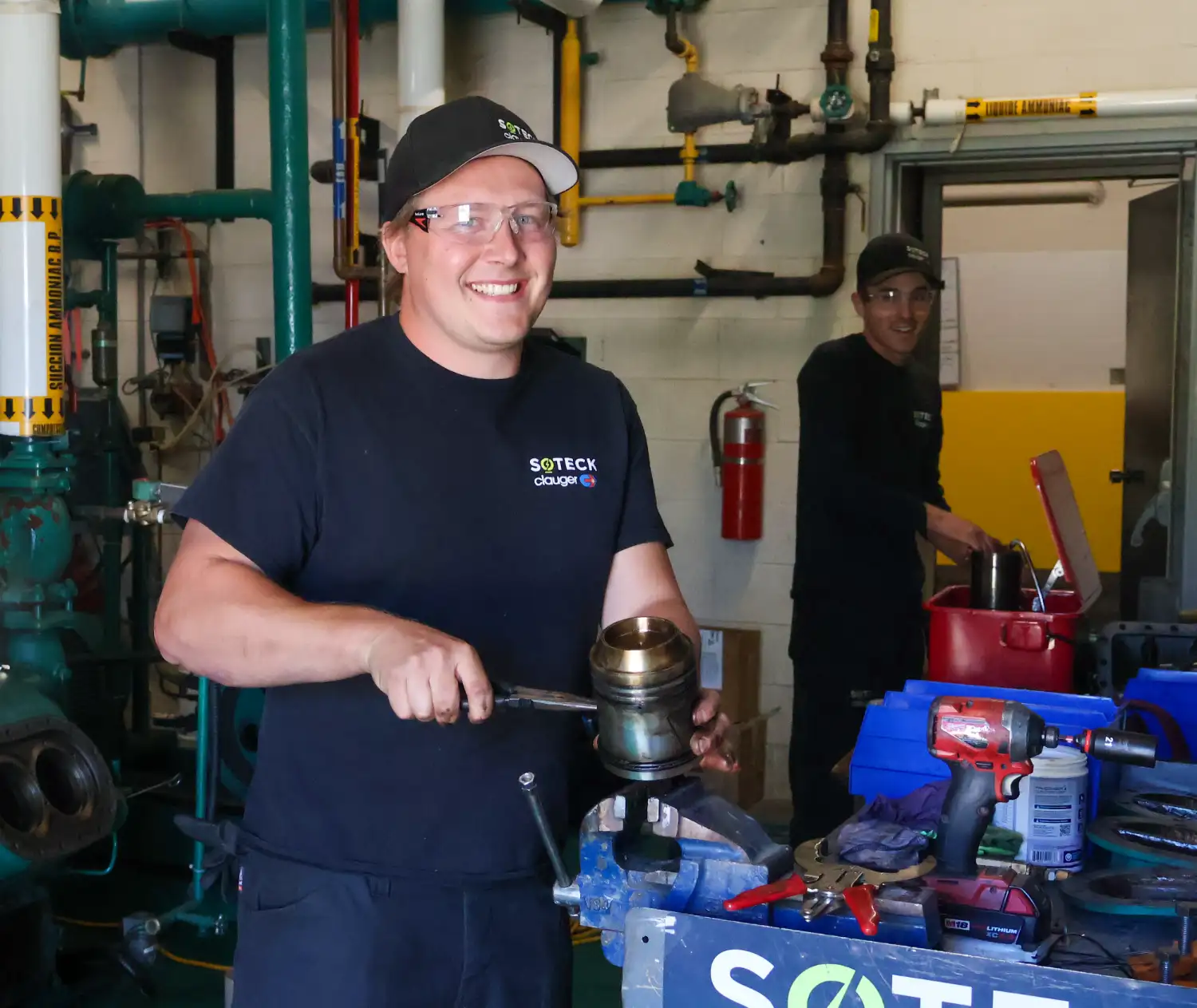
- 24/7 maintenance service to guarantee continuity of your operations
- Industrial NH₃ and CO₂ Refrigeration: Read our article on How to Turn a Challenge into a Performance Driver
- Natural Refrigerants: A Guide to Making the Right Choice NH₃ vs CO₂ : Understand, compare, choose
- With our proven expertise in HFO refrigerants (R1233zd in our Hi-PAC 85 heat pumps), we have mastered the entire spectrum of refrigeration technology: from high-performance natural refrigerants to next-generation HFO solutions, offering a comprehensive and objective technological approach.
TECHNICAL EXPERTISE SCALED TO YOUR OPERATIONS
- Cutting-edge technology with a human approach
- IoT monitoring with alerts sent directly to your mobile device
- Predictive AI explained without jargon
- High-temperature NH₃ heat pumps (90 °C and above): ideal for the dairy and food-processing sectors
- Smart retrofitting: modernization without costly replacement
- Transcritical CO₂ for SMEs: ecological performance without prohibitive costs
- Dashboards designed for your operators, not for engineers
WHY CHOOSE US?
- Multidisciplinary expertise: complete integration of refrigeration, electrical, air treatment and energy management
- Scalable solutions: systems that grow with your needs
- Performance commitment: guaranteed ROI and assured regulatory compliance
- Smart monitoring: predictive maintenance via advanced digital tools
Satisfied customers:
“After 10 years with a large national supplier, the change is radical. My Soteck Clauger technician knows my plant inside out. No more ‘escalated tickets’: I call when needed and they fix everything, simple and effective.”
Plant manager, processing, Central Quebec
“Others quoted us $2M to rebuild everything. Soteck Clauger modernized our system for $600K with better energy results.”
VP Operations, Regional Food Distribution
WE OPTIMIZE YOUR EXISTING SYSTEMS
Your current system deserves our expertise, regardless of who installed it. We handle maintenance for all brands and configurations. Our preventive maintenance contracts transform your aging equipment into high-performing assets:
- Free comprehensive diagnostic: assessment of condition and optimization potential
- Flexible contracts: Monthly, quarterly, or annual based on your needs
- Predictive maintenance: Planned interventions avoiding costly downtime
- Progressive compliance: Environmental conformity without replacing everything
Result: 5 to 10 years useful life extension and 75% reduction in breakdowns. We become your external refrigeration department, without the fixed costs.
A PARTNERSHIP THAT EVOLVES WITH YOUR BUSINESS
We excel in all phases of your project
- Decisions in 48 hours, not 4 weeks
- Adaptive solutions following your growth
- Free energy audit including thermographic analysis, personalized 5-year ROI calculation, and industry benchmarking
Together, we transform your refrigeration into a lasting competitive advantage.
Content reviewed by:

Jonathan Desmars
Sales and Development Manager, Industrial Refrigeration & HVAC
With nearly 20 years of experience in the refrigeration industry, ranging from electromechanical refrigeration to marine refrigeration and then to industrial food-processing refrigeration. He oversaw the first scheduled shutdown of an ammonia condenser carried out by Soteck Clauger, as well as the first complete mechanical overhaul in our shop.
Optimize your refrigeration with long-lasting, high-performance solutions
When designed properly, refrigeration is not an expense: it’s a driver of competitiveness for manufacturers. For food and beverage producers and manufacturers, we offer systems designed with the entire lifecycle in mind. Natural refrigerants, transcritical CO₂, and heat recovery: every choice is aimed at ensuring energy-efficient equipment. These systems lower your energy costs and safeguard your cold chain, from design through 24/7 maintenance.
A well-optimized industrial process protects your manufacturing operations while reducing your environmental footprint. This is refrigeration designed with the environment in mind. We combine cooling with energy recovery to meet your heating and cooling needs, all from a single system, delivering measurable and reliable environmental benefits.
Modernize or replace? Expert advice is often all it takes to make a decision without overspending. An assessment of your energy plan quickly reveals the real potential savings. Let’s explore together how to turn your current challenges into long-term savings. Entrust the design, optimization, and maintenance to a team that understands every fluid in your industrial refrigeration system.
Frequently asked questions about industrial refrigeration
What is the difference between NH₃ and CO₂ refrigeration?
NH₃ (ammonia, R717) and CO₂ (R744) are two high-performance natural refrigerants, but they excel in different areas. Ammonia has a very high latent heat and one of the best coefficients of performance (COP) on the market, making it unbeatable for high cooling capacities and moderate temperatures. Its GWP is zero, but its toxicity requires compliant machine rooms, leak detection, and strict safety protocols.
CO₂, on the other hand, is non-toxic and non-flammable, with exceptional volumetric capacity that allows for more compact piping and excellent efficiency at low temperatures. Above its critical point (approximately 31 °C), it operates in transcritical mode, which has historically been less efficient in hot weather; however, parallel compressors and ejectors have largely bridged this gap.
In many cases, the optimal solution is an NH₃/CO₂ cascade system: ammonia in the high-pressure stage and CO₂ on the low-temperature side. The right choice depends on your target temperatures, capacity, plant layout, and safety requirements.
Is transcritical CO₂ suitable for SMEs?
Yes, transcritical CO₂ is now a mature option available to small and medium-sized businesses, not just large plants. The transcritical cycle occurs when the discharge temperature exceeds the critical point of CO₂: the refrigerant no longer condenses in the conventional manner, which previously required precise control and reduced efficiency in hot climates. Recent advances have changed the game: parallel compression, economizers, ejectors, and adiabatic gas coolers bring efficiency back to the level of traditional systems, or even higher. Pre-assembled, compact units are now available for modest capacity applications, reducing engineering and installation costs.
The result: a non-toxic refrigerant with a GWP of 1, fully compliant with global regulatory restrictions on HFCs. For an agri-food SME, this is an investment that ensures future compliance while keeping energy costs under control.
Can a refrigeration system be modernized without replacing everything?
Yes, smart retrofitting allows you to modernize an existing system without the cost or downtime associated with a complete replacement. The process begins with an assessment of the equipment’s current condition and its potential for optimization, regardless of brand or configuration. Depending on the situation, we may work on the compressors, control systems and automation, switch to cleaner refrigerants, add variable-speed drives, or integrate a heat recovery module. We retain the housing and components that are still in good condition, while gradually bringing the system up to current standards.
This approach extends the useful life of equipment, ensures reliable production, and spreads out the investment. Combined with a preventive maintenance contract and predictive maintenance, it transforms aging equipment into high-performing assets without shutting down your production line.
How does heat recovery reduce my energy costs?
Heat recovery harnesses the energy normally rejected by your cooling systems to meet heating needs, rather than allowing it to be dissipated into the atmosphere. There are two types: desuperheating, which captures high-temperature heat at the compressor outlet to produce hot water, and condensation recovery, which provides larger volumes of water at moderate temperatures.
With a high-temperature NH₃ heat pump, temperatures of 90 °C and higher can be achieved, which are sufficient for CIP cleaning, sanitation, domestic hot water, or space heating. Every kilowatt recovered is a kilowatt you don’t have to purchase from the boiler, which directly lowers your operating costs and emissions.
In a food processing plant, where cold and hot water are constantly present, the return on investment is often quick. This is one of the most tangible benefits of energy-efficient industrial refrigeration.
Which refrigerants are the most environmentally friendly?
Natural refrigerants, NH₃, CO₂ and propane, have the lowest environmental impact and form the basis of sustainable refrigeration. Two metrics guide the selection process: ODP (ozone depletion potential) and GWP (global warming potential).
Natural refrigerants have a GWP of virtually zero, compared to several hundred to several thousand for many HFCs targeted for phase-out under the Kigali Amendment. Where a synthetic refrigerant remains technically viable, particularly at high temperatures, next-generation HFOs such as R1233zd offer a very low GWP and serve as a transition solution.
The real reasoning goes beyond the refrigerant alone: we must focus on the TEWI, which is the sum of direct (leaks) and indirect (energy consumption) emissions over the system’s entire lifecycle. By mastering the entire refrigeration spectrum, from natural refrigerants to HFOs, we can recommend the solution that is truly the most energy-efficient for each application, free from commercial bias.